
Table of Contents
Difference Between An Estimate And A Quote: A Clear Guide
An estimate and a quote look similar on the page, a client name, some line items, a total at the bottom, and that similarity is exactly what causes the problem. Treat one like the other and you either scare off a client with a number that later changes, or lock yourself into a price that no longer covers your costs. This guide sets out the actual difference between an estimate, a quote, and an invoice, and when to use each one.
The Short Answer
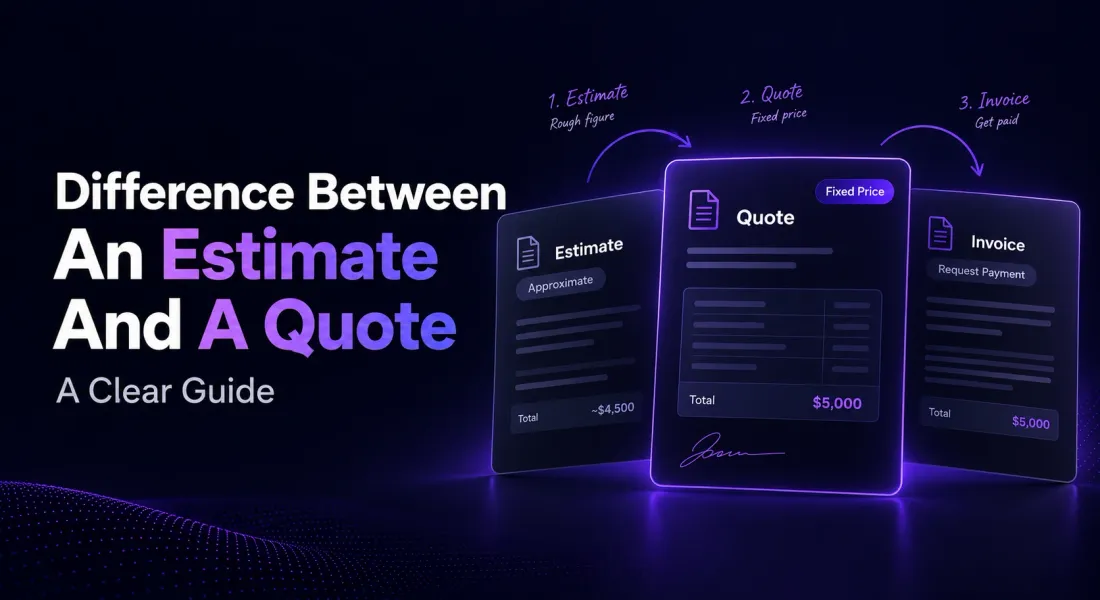
An estimate is an approximate figure given before all the details are confirmed. A quote is a fixed price you commit to once the scope is known. An invoice is the bill sent after the work is done, requesting payment. They sit in that order across a typical job: estimate first, quote once scope is locked, invoice once the work is complete.
What Is An Estimate?
An estimate is a rough, good faith figure based on limited information, usually given early, before a full scope has been confirmed. It signals “here is roughly what this will cost” rather than “here is exactly what this will cost,” and both sides generally understand that the real number may move once the details are settled.
Estimates are common in situations where the final scope genuinely cannot be known upfront: a renovation where the contractor cannot see behind the walls until work starts, a repair job where the cause is not confirmed until it is inspected, or an early stage consulting engagement where the scope depends on findings from initial discovery.
When To Use An Estimate
- The scope is not yet fully defined and will only be clear once work begins.
- You are giving a client a rough figure to help them decide whether to proceed to a full scoping conversation.
- The job involves unknowns that cannot reasonably be assessed without starting the work.
What Is A Quote?
A quote is a fixed, committed price for a clearly defined scope of work. Once you send a quote and the client accepts it, you are generally expected to honour that price, which is why a quote should only go out once you actually know what the job involves. Sending a quote before the scope is confirmed is one of the most common ways businesses end up doing work at a loss.
A proper quote states the exact deliverables, the price for each, any exclusions, and how long the price remains valid. That last part matters more than most people give it credit for: without a validity period, you could be held to a price you gave months ago, after your costs have changed.
When To Use A Quote
- The scope is fully defined and you are prepared to commit to the price.
- The client has asked for a firm number to approve, not a ballpark figure.
- You want a written record of exactly what was agreed, in case of a dispute later.
What Is An Invoice?
An invoice is a request for payment, sent after work has been delivered or at agreed milestones during it. Where an estimate and a quote both look forward, toward work that has not happened yet, an invoice looks backward at work that has, referencing what was actually delivered against what was originally quoted.
A well built invoice references the original quote directly, so a client can see the connection between what they agreed to and what they are now being asked to pay, rather than a number appearing with no visible link to the original agreement.
Estimate Versus Quote: The Practical Differences
| Estimate | Quote | |
|---|---|---|
| Commitment level | Approximate, can change | Fixed, binding once accepted |
| When it is used | Before scope is fully known | Once scope is confirmed |
| Typical accuracy | Rough range | Exact figure |
| Client expectation | ”Roughly what to expect" | "This is the price” |
| Risk if scope changes | Low, figure was never fixed | High, requires a formal change order |
Quote Versus Invoice: The Practical Differences
| Quote | Invoice | |
|---|---|---|
| Timing | Sent before work begins | Sent during or after work is delivered |
| Purpose | Proposes a price for approval | Requests payment for work done |
| Reference point | Stands on its own | References the original quote or agreement |
| Client action needed | Accept or negotiate | Pay by the due date |
Why Mixing These Up Costs Money
The most expensive version of this mistake is quoting when you should have estimated. A client asks “roughly what would this cost,” you give a specific number to sound confident, and that number quietly becomes the price they expect, even though you gave it before you actually knew the full scope. When the real cost turns out higher, you are stuck either eating the difference or having an awkward conversation that damages trust.
The reverse mistake, estimating when you should have quoted, causes a different problem. A client who has asked for a firm number to get internal approval receives a vague range instead, and either delays the decision to ask for something firmer or takes your estimate to a competitor who is willing to commit to a fixed price.
How To Move From Estimate To Quote Cleanly
- State clearly, in writing, that the initial figure is an estimate, not a committed price.
- Define exactly what additional information is needed before you can issue a firm quote.
- Once that information is available, issue a proper quote as a separate document, not an edited version of the estimate.
- Give the quote a validity period, so both sides know how long the price holds.
Keeping the estimate and the quote as visibly separate documents, rather than one evolving number, avoids the confusion where a client assumes the original rough figure was always the real price.
Building Quotes That Do Not Get Mistaken For Guesses
A quote that looks like a rough estimate undermines its own purpose. Clear, structured pricing signals that the number is final, which is exactly what a client approving a budget needs to see.
Structured pricing tables that lay out rates, quantities, and any discounts clearly do more to establish a quote as firm than the wording around it does. Once a client accepts, client signing built into the same document turns approval into a recorded signed status and signing date, with a confirmation email sent automatically, rather than a verbal yes that leaves both sides unclear on exactly what was agreed. For teams still building these by hand, this comparison of free online quotation generators covers where a manual spreadsheet starts breaking down.
Common Mistakes
- Giving a specific number when you only have enough information for a rough estimate.
- Sending a quote with no validity period, leaving you exposed to a stale price months later.
- Treating a scope change as automatically covered by the original quote instead of requiring a formal update.
- Sending an invoice that does not reference the quote it is based on, leaving the client to work out the connection themselves.
- Using the words estimate and quote interchangeably in client conversations, which sets the wrong expectation from the start.
Final Word
An estimate tells a client roughly what to expect. A quote commits you to a specific price. An invoice collects payment for what was actually delivered. Keeping these three distinct, in language and in the documents themselves, is a small discipline that prevents a genuinely large category of disputes and margin loss.
For the quoting step specifically, a quote generation workflow that pulls pricing into a clean, structured document and tracks it through to signed removes the ambiguity that turns a firm quote back into a guess in the client’s mind.
Frequently Asked Questions
Does accepting a quote create a binding commitment?
Once accepted by the client, a quote generally forms the basis of an enforceable agreement on the terms it states, which is why the scope and price in a quote should be accurate and final before you send it, unlike an estimate.
Can an estimate turn into an invoice directly?
No. An estimate should move to a confirmed quote once the scope is known, and the invoice should then reference that quote, not the original rough estimate.
How much can the final price differ from an estimate?
There is no fixed rule, but a reasonable range is typically expected, often within 10 to 15% depending on the industry. A final price wildly different from the original estimate, without a clear explanation of what changed, damages trust regardless of the percentage.
What is the difference between a quote and a bid?
The terms are often used interchangeably, though bid is more common in construction and competitive tender contexts, where multiple parties submit pricing for the same defined scope and the client selects one.
Should small jobs still get a written quote?
Yes. Even a simple job benefits from a short written quote confirming price and scope, since verbal agreements are the most common source of disputes over what was actually promised.

Ronak Surti

 Prabir Chaudhary
 Ronak Surti

 Dimple Maru