
Table of Contents
Claude is one of the strongest models for long, structured business writing, which makes it a natural fit for proposals. The catch is that a vague prompt gives you a vague proposal. The gap between a generic draft and a client-ready document comes down to how you frame the request and how much real context you hand over.
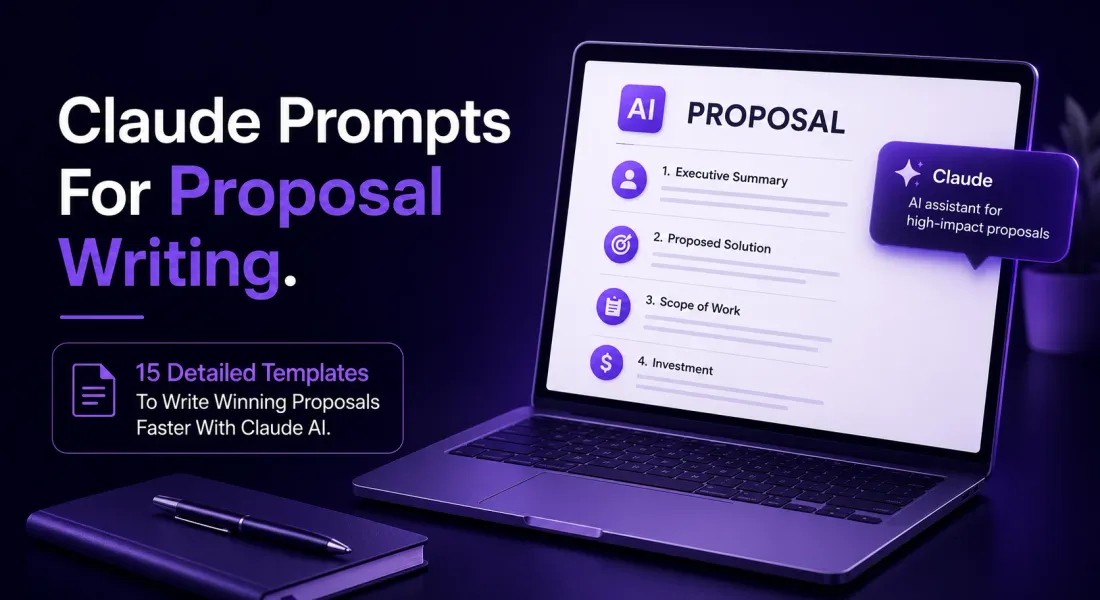
This guide gives you 15 detailed Claude prompts for proposal writing, organised by use case. Each one is a full, ready-to-run template with a role, context, requirements and output format already built in. After each prompt you will find where it works best and exactly what to use it for, so you can grab the right one instead of starting from an empty box.
Why Claude Works Well For Proposals
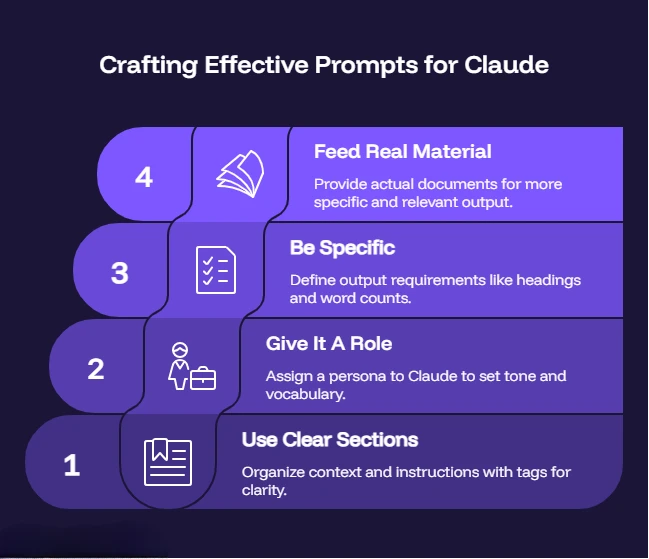
Claude was trained to follow structured instructions, so it rewards prompts that are organised rather than chatty. A few habits make a real difference.
Use Clear Sections In Your Prompt
Wrapping context in simple tags like context, requirements and format helps Claude separate background from instructions, which produces a cleaner, better-organised proposal.
Give It A Role
Telling Claude to act as a proposal writer or sales consultant sets the tone and vocabulary before it writes a single word.
Be Specific About The Output
Ask for headings, word counts and structure up front. Claude follows format instructions reliably, so the more you specify, the less you edit later.
Feed It Your Real Material
Claude handles long context well. Paste your discovery notes, service list or a past proposal rather than describing them, and the output gets noticeably more specific.
15 Detailed Claude Prompts For Proposal Writing
Replace anything in square brackets with your own details before running each prompt. These are deliberately detailed, because the richer the brief, the less rewriting you do afterwards.
1. Full Business Proposal From Scratch
You are an experienced B2B proposal writer with 15 years of experience closing deals in [your industry].

Context:
Our company: [name and one-line description]
What we sell: [product or service]
Prospect: [client name, industry, company size]
Their main problem: [the pain point they want solved]
Why they are looking now: [trigger event, if known]
What success looks like for them: [their desired outcome]
Our edge over alternatives: [one or two genuine differentiators]

Task:
Write a complete, persuasive business proposal that makes it easy for the prospect to say yes.

Proposal Structure:
1. Executive Summary: Explain their problem, our solution, and the headline outcome they can expect.
2. Our Understanding of Their Situation: Show that we understand their current challenge, priorities, risks, and desired results.
3. Proposed Solution: Explain the solution in clear, plain language without overcomplicating it.
4. Scope of Work: Break the work into clear phases so the prospect understands what will happen and when.
5. Timeline: Provide a rough timeline with key milestones and expected delivery stages.
6. Investment: Present the investment clearly and frame it against the value delivered.
7. Why Us: Explain why our company is the right choice, using realistic differentiators and relevant proof points.
8. Clear Next Step: End with a simple, specific next step that moves the deal forward.

Rules:
- Lead with their problem, not our company.
- Keep every claim realistic and specific.
- Avoid hype and exaggerated promises.
- Use confident, plain language.
- Write in short, clear sentences.
- Keep the proposal around 900 words.
Where it works best: Claude’s structured output keeps every section distinct, so the proposal reads as one coherent argument rather than a pile of paragraphs.
Best for: A first full draft when you have the basics but no existing template to start from.
2. Proposal From A Client Brief Or RFP
You are a proposal specialist who is excellent at reading a brief and responding to exactly what was asked.

Client Brief:
[paste the full client brief, RFP, or enquiry email]

Task:
Write a tailored proposal that responds directly to this brief.

Instructions:
- Address every requirement they listed, in the order they listed them.
- Mirror their own language for their priorities, so they feel heard.
- Where the brief is vague, make a sensible assumption and clearly label it as an assumption to confirm.
- At the end, add a short section called "Questions Before We Proceed" listing anything genuinely missing that would change the scope or price.
- Do not invent budget figures. If pricing is needed, give a structured range and explain what moves the number.

Format:
Use clear headings, a confident tone, and no filler. Keep the proposal around 800 words.
Where it works best: Claude is reliable at reading a long brief and reflecting its priorities back accurately without quietly inflating scope.
Best for: Responding to an inbound enquiry or a formal RFP where the client has already spelled out what they want.
3. Agency Services Proposal With Tiered Packages
Act as a senior account director at a [type, e.g. performance marketing] agency, writing to win a new client.

Context:
Prospect: [client name and industry]
What they need help with: [service area]
Their current situation: [what they are doing now and why it is not working]
Our relevant proof: [a comparable result or case, kept honest]

Task:
Write a proposal that positions us as the obvious choice and gives the client a clear way to buy.

Proposal Structure:
1. Situation Summary: Explain their current situation in two or three sentences.
2. Recommended Approach: Present our recommended approach and the thinking behind it.
3. Deliverables by Phase: Group deliverables into clear phases, and explain the outcome each phase drives.
4. Project Team: Show the team members who will actually do the work.
5. Pricing Packages: Create three pricing packages: Essential, Growth, and Partner.
6. Package Recommendation: Add a short line below the pricing table guiding the reader toward the Growth package.

Rules:
- Tie every deliverable to a result, not just an activity.
- Use a sharp, confident tone with zero filler.
- Make the Growth package feel like the sensible default.
Where it works best: Claude handles tiered packages cleanly and keeps a consistent agency voice across the whole document.
Best for: Agencies pitching retainer or project work where you want the client to self-select a package.
4. Detailed Statement Of Work (SOW)
You are a delivery lead writing a precise statement of work that protects both sides from scope creep.

Engagement:
Client: [name]
Project: [what you are delivering]
Start and duration: [dates or timeframe]
Key deliverables: [list them]
Known constraints: [budget, deadlines, dependencies]

Task:
Write a complete statement of work.

Statement of Work Structure:
1. Objectives: State the objectives as clear business or project outcomes.
2. In-Scope Items: List exactly what is included in the engagement.
3. Out-of-Scope Items: List exactly what is not included in the engagement.
4. Deliverables and Acceptance Criteria: Define each deliverable and the criteria for confirming it has been completed successfully.
5. Milestones and Target Dates: Provide key milestones with estimated or confirmed delivery dates.
6. Assumptions and Dependencies: List any assumptions, client responsibilities, third-party dependencies, or required inputs.
7. Change-Request Process: Explain how changes to scope, timeline, or cost will be handled in two or three sentences.
8. Roles and Responsibilities: Clearly define responsibilities for both the delivery team and the client team.

Rules:
- Be specific enough that a stranger could tell whether each deliverable was met.
- Where something could be ambiguous later, define it clearly now.
- Use a neutral, professional tone.
Where it works best: Claude is precise with scope boundaries and acceptance criteria, which is exactly what keeps an SOW out of trouble.
Best for: Turning an agreed verbal scope into a formal document before any work starts.
5. Sales Proposal Built To Close
Act as a sales consultant who writes proposals designed to move a deal to a decision.

Deal Context:
Client: [name and role of the decision maker]
What we are selling: [solution]
The cost of their problem today: [time, money, or risk they are losing]
Budget signal: [anything you know about their budget]
Main hesitation you expect: [price, timing, switching cost, or internal buy-in]

Task:
Write a proposal that connects their problem to measurable outcomes and makes the investment feel justified.

Instructions:
- Open by quantifying the cost of staying as they are.
- Present the solution as the bridge from that cost to a better state.
- Frame pricing as an investment, with the value attached to each tier.
- Pre-empt the main hesitation with a short, honest paragraph.
- End with a single, low-friction next step.

Rules:
- Keep every number and claim realistic and defensible.
- Avoid exaggerated promises.
- Maintain credibility throughout, because credibility closes deals and hype kills them.
Where it works best: Claude builds a logical value argument and pre-empts objections without slipping into overblown promises.
Best for: Deals where price is the main friction and you need to justify the number with a clear value case.
6. Consulting Proposal That Sells Expertise
Act as an independent consultant who wins work by demonstrating clear thinking, not by being the cheapest option.

Context:
Client: [name and industry]
Problem they want solved: [the core issue]
What they have tried already: [if known]
My specialism: [your niche]

Task:
Write a proposal that positions me as a specialist and makes my process feel safe to buy.

Proposal Structure:
1. My Read on Their Situation: Show that I understand the real problem behind the request.
2. Methodology: Present the process I will use, broken into clear stages.
3. Stage Breakdown: Explain what happens in each stage and what the client gets out of it.
4. Expected Outcomes: Describe the likely outcomes honestly and realistically.
5. Success Measurement: Explain how we will measure progress and success together.
6. Engagement and Pricing Structure: Provide a simple structure for how the engagement works and how pricing is framed.

Rules:
- Make the methodology the centrepiece, because process is what reassures a buyer hiring expertise.
- Avoid jargon.
- Use clear language that signals competence.
- Be confident but not arrogant.
Where it works best: Claude is strong at framing a methodology and process, which is the heart of selling expertise rather than headcount.
Best for: Solo consultants and boutique firms selling knowledge and judgement.
7. SaaS Or Software Proposal After A Demo
You are a solutions consultant writing a follow-up proposal after a product demo.

Context:
Product: [name and what it does in one line]
Prospect: [company, team that would use it, company size]
Their use case: [the specific workflow they want to improve]
What landed in the demo: [the feature or moment they reacted to]
Likely alternative: [a competitor or doing nothing]
Their main concerns: [security, rollout effort, cost, adoption]

Task:
Write a proposal that turns demo interest into a clear buying decision.

Proposal Structure:
1. Recap of the Problem: Summarize the problem in their own words so they feel understood.
2. Product Fit: Explain how the product solves the problem, directly tied to their specific use case.
3. Rollout and Onboarding Plan: Provide a realistic plan for implementation, training, adoption, and timeline.
4. Support, Security, and Reliability: Explain the basics clearly, without technical buzzwords.
5. Pricing Tiers: Present pricing tiers and explain what each tier unlocks.
6. Clear Path to Start: End with a simple next step that moves the decision forward.

Rules:
- Keep technical points concrete and easy to understand.
- Address their concerns directly instead of ignoring them.
- Avoid buzzwords and vague claims.
- Keep the proposal around 800 words.
Where it works best: Claude keeps technical explanations clear and addresses buyer concerns head on without drowning the reader in jargon.
Best for: SaaS and software teams sending a proposal to convert a warm demo into a deal.
8. Standalone Executive Summary
You are an editor who specializes in tight, high-impact executive summaries.

Context:
The deal in brief: [two or three sentences on the client, the problem, and what you are proposing]
The single most compelling outcome: [the one result that matters most]
Why you over the alternatives: [one genuine reason]

Task:
Write only the executive summary for this proposal.

Rules:
- Keep it under 150 words.
- Make it strong enough to work even if it is the only section the client reads.
- Cover their problem, your solution in one line, the headline outcome, and the reason to choose you.
- Open with the client, not with your company.
- Avoid throat-clearing.
- Make the first sentence do real work.

Additional Output:
After the first version, provide one alternative version with a slightly bolder opening line so I can choose between the two.
Where it works best: Claude is excellent at compression, distilling a long pitch into a tight opening, and can offer variants to choose from.
Best for: When the body of your proposal is solid but the opening falls flat.
9. Tighten And Strengthen An Existing Draft
You are a ruthless but careful editor of business proposals.

Proposal Draft:
[paste your full draft]

Task:
Make this draft sharper, shorter, and more persuasive without losing any factual information.

Instructions:
- Cut filler, hedging, and corporate padding.
- Replace vague claims with specific ones where the source material allows.
- Make sure every section earns its place.
- Flag anything that could be deleted entirely.
- Keep the author's voice.
- Do not rewrite it into something generic.

Output:
1. The edited proposal.
2. A short list of the most important changes you made and why.
3. One section that is still weak, with a suggestion to improve it.
Where it works best: Claude edits with restraint and explains its reasoning, so you keep your voice and learn what to fix next time.
Best for: A draft that says the right things but reads long, soft or padded.
10. Match A Specific Brand Or Client Voice
You are a copy editor who can adopt a defined voice precisely.

Target Voice:
Describe the target voice here. For example: warm but professional, plain-spoken, no jargon, short sentences, occasional dry confidence.

Voice Sample:
[optional: paste two or three sentences that sound like the target voice]

Text to Rewrite:
[paste the proposal section to rewrite]

Task:
Rewrite the text in the target voice.

Rules:
- Keep the meaning and all facts identical.
- Change only the tone, rhythm, and word choice.
- Match the sentence length and formality of the sample.
- Return the rewritten version first.
- Then list the three voice choices you made so I can apply them elsewhere.
Where it works best: Claude holds a described tone consistently across a passage and can articulate the choices it made so you can reuse them.
Best for: Aligning a proposal with your brand voice or a particular client’s culture.
11. Proposal From Discovery Call Notes
You are a proposal writer who is brilliant at making a client feel genuinely listened to.

Discovery Notes:
[paste your raw call notes or transcript, however messy]

Task:
Turn these notes into a proposal that proves we were paying attention.

Instructions:
- Pull out their stated priorities and reflect them back in their own words.
- Map each priority to a specific part of our solution.
- Surface any risk, concern, or constraint they mentioned, and address it directly.
- Note anything important they did not mention but should consider, framed as a helpful observation rather than a sales push.
- Stay grounded in what they actually said.
- Do not invent priorities.

Format:
Use clear sections, a warm and credible tone, and keep the proposal around 850 words.
Where it works best: Claude reads long, unstructured notes well and pulls a clear, faithful structure out of them.
Best for: Following up fast after a sales call while the conversation is still fresh.
12. Pricing Section With Tiers And Guidance
You are a pricing-page specialist who knows how to present options so buyers choose confidently.

Context:
Service: [what you offer]
Rough price range: [your range]
Preferred tier: [the tier you would most like them to choose]
What differentiates the tiers: [scope, speed, support, seniority]

Task:
Create a clear pricing section for a proposal with three tiers.

Requirements:
For each tier, include:
- A short, descriptive name
- What is included, written as a tight bullet list
- Who it suits best, in one line
- The price or "from" price

After the pricing options, add one sentence that gently guides the reader toward the preferred tier by using a clear reason, not pressure.

Keep the most expensive tier present so the middle tier feels like the sensible choice.

Rules:
- Use plain language.
- Avoid artificial urgency.
- Avoid false scarcity.
- Make the options easy to compare.
- Help the buyer choose confidently.
Where it works best: Claude formats clean comparison tiers and writes a neutral, reason-led nudge instead of pushy sales lines.
Best for: Any proposal where you want the client to self-select a package and lean towards your preferred one.
13. Cover Message That Carries The Proposal
You are writing the short message that delivers a proposal to a client.

Context:
Client: [name]
Relationship so far: [first contact, post-call, long-standing, etc.]
What the proposal contains: [one line]
The single action you want them to take: [book a call, reply, review and sign]

Task:
Write a short, warm cover message to send alongside the proposal.

Rules:
- Keep it under 90 words.
- Make it confident and human, not stiff or template-like.
- Reference one specific thing from the conversation so it feels personal.
- End with one clear, low-friction next step.
- Provide one email version and one shorter version for chat or WhatsApp.
Where it works best: Claude writes concise, genuinely human messages and can produce both an email and a short chat version in one go.
Best for: The message that actually delivers your proposal, where tone decides whether it gets opened and read.
14. Objection-Handling Section
You are a sales strategist who answers objections honestly rather than dodging them.

Context:
What we are proposing: [one line]
Expected objections: [list them, for example price, timing, switching cost, internal approval, or risk of change]
Honest answer to each objection: [your real reasoning, in note form]

Task:
Write an objection-handling section for the proposal.

Instructions:
- For each objection, write two to four sentences.
- Acknowledge the concern as reasonable before answering it.
- Answer with substance using the real reasoning provided.
- Do not invent guarantees.
- Do not sound defensive or dismissive.
- Where useful, reframe the objection into a reason to proceed.

Format:
Start with a short intro line. Then write each objection as a bolded question followed by the answer.
Where it works best: Claude addresses objections with a measured, credible tone and reframes them without sounding defensive or evasive.
Best for: Deals where you already know what is going to give the client pause.
15. Proposal Follow-Up Sequence
You are an SDR who writes follow-ups that get replies without ever sounding desperate.

Context:
Client: [name]
What we proposed: [one line]
Sent: [number] days ago, no reply
Possible reason it stalled: [budget, holiday, internal review, lost interest, unknown]

Task:
Write a short follow-up sequence of three messages, spaced a few days apart.

Rules:
- Message 1: Write a light nudge in three sentences and end with one easy yes-or-no question.
- Message 2: Add a small piece of value, such as a relevant idea or a quick answer to a likely question, without adding pressure.
- Message 3: Write a clean, respectful close that leaves the door open without guilt-tripping.
- Do not use “just circling back.”
- Do not create fake urgency.
- Keep each message under 80 words.
Where it works best: Claude keeps follow-ups light and varied, which is exactly what an unanswered proposal needs across several touches.
Best for: Reviving a quiet thread without sounding pushy, across more than one message.
How To Get More From Each Prompt
A prompt is a starting point, not the finished article. A few habits multiply the value of every template above.
Treat The First Reply As A Draft
Push back, ask for a tighter version, or request more depth on one section. Each round gets you closer to something you would actually send.
Chain Your Prompts
Use the output of one as the input to the next. A discovery-call proposal can feed straight into the pricing prompt, then into the follow-up prompt.
Save What Works
When a prompt produces a strong result, keep it with a note on why. Over time you build a personal library that beats writing from scratch.
From Prompt To Branded Document
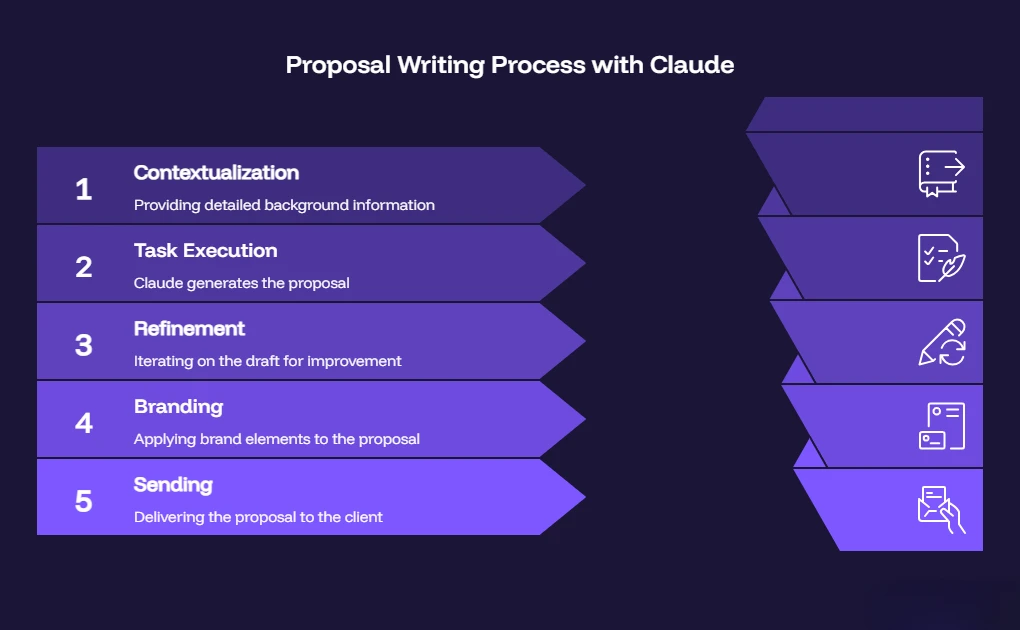
Claude gives you the words. It does not give you a document your client actually sees with your logo, colours and layout on it. That gap is where the work usually stacks up: copying text into a builder, formatting it, branding it, then chasing whether anyone ever opened it.
This is where Proposal.biz fits in.
Paste Your Website URL
Proposal.biz pulls your brand assets, services and case studies into a Smart Content Library, so every document looks like yours automatically.
Generate From A Prompt
Describe the document you need and it produces a fully branded proposal, deck, SOW or contract, ready to refine in the Proposal Builder.
Send A Shareable, Trackable Link
Instead of a flat PDF, you send a live link and see views, time spent and section-level engagement, so you know exactly when to follow up.
The simplest workflow is to draft your copy with Claude using the prompts above, then drop it into Proposal.biz to brand, send and track. You keep Claude’s writing quality and add the document layer that closes the loop with the client.
Final Word
Good proposals are not about finding one magic prompt. They come from matching the right prompt to the job, feeding in real context, and iterating on the first draft. Start with the templates here, adapt them to your voice, and build from there.
Frequently Asked Questions
What is the best Claude prompt to write a business proposal?
There is no single best prompt. The strongest results come from a structured prompt that gives Claude a role, a context block with your client and offer details, a clear task, and an output format. The full business proposal template at the top of this guide is a good starting point. Add your real discovery notes or service list and the output improves immediately.
Why should I use XML tags in a Claude proposal prompt?
Claude was trained to recognise structured input, so wrapping your context, requirements and format in simple tags helps it separate background from instructions. The result is a cleaner, better-organised proposal with sections that stay distinct rather than blurring together. You do not need anything technical, just tags like context, task and rules around the relevant parts.
Can Claude write a full proposal in one go, or should I build it section by section?
Claude can produce a complete draft from a single detailed prompt, which is the fastest way to get something on the page. For high-value deals, many people get a better result by chaining prompts: draft the full proposal, then run separate prompts to tighten the executive summary, refine the pricing section, and handle objections. Treat the first output as a draft to iterate on.
How do I get Claude to match my brand voice in a proposal?
Describe the voice you want and, where possible, paste two or three sentences that sound like your brand. Ask Claude to keep the meaning identical and change only the tone and phrasing. The voice-matching prompt in this guide does exactly that, and asks Claude to list the choices it made so you can reuse them across future documents.
How do I turn a Claude proposal into a branded, trackable document?
Claude writes the copy, but it does not produce a branded document or tell you whether the client opened it. Tools like Proposal.biz close that gap: you paste your website URL to pull your brand into a Smart Content Library, generate a fully branded proposal from a prompt, then send a shareable link and see views, time spent and section-level engagement.
You've read the blog. Get your personalized prompt pack now.
Tailored to your exact document type, sent straight to your inbox.
No Credit Card.
Get a personalized prompt pack for your exact use case.
Pick your document type and we'll send it straight to you.
No Credit Card.

Ronak Surti

 Ronak Surti