
Table of Contents
Lead Generation vs Prospecting: What’s the Difference and Which Do You Need?
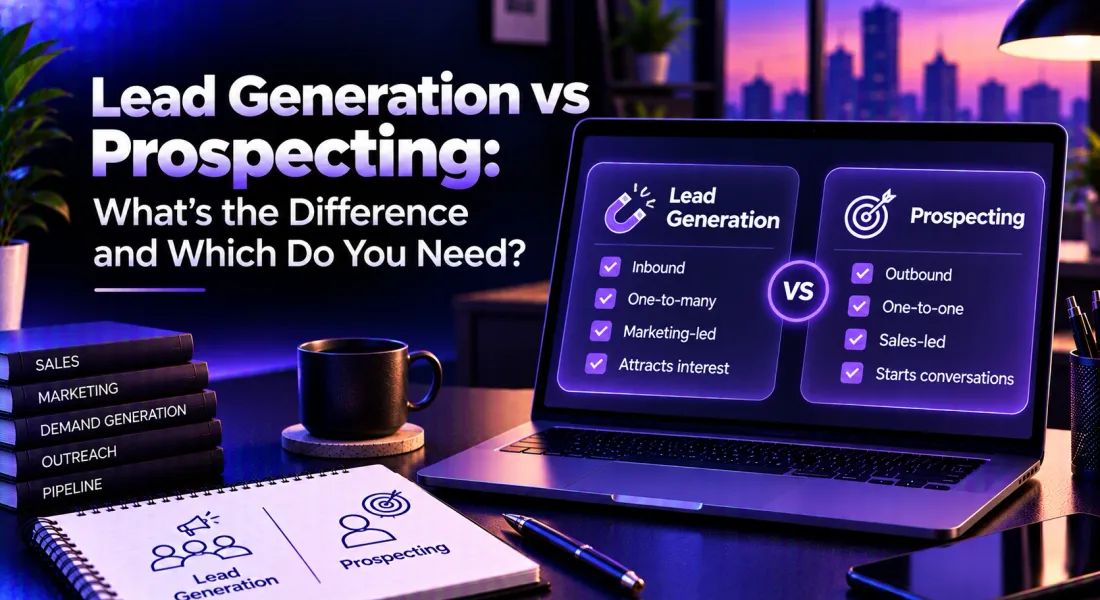
Lead generation attracts potential buyers to come to you, usually through marketing activity aimed at many people at once. Prospecting is sales reaching out to specific potential buyers one by one. Lead generation is one-to-many and largely inbound; prospecting is one-to-one and largely outbound. Most growing B2B companies need both.
The two terms are used interchangeably so often that teams argue about them without realising they mean different things. That confusion has real consequences. In sales and marketing communities, the same complaints come up again and again: marketing says it delivered plenty of leads, sales says none of them were ready to buy, and nobody agreed what a lead was in the first place.
This guide explains lead generation vs prospecting in practice: how each works, where they overlap, what practitioners say goes wrong, which to prioritise for your situation, and how to turn both into real sales opportunities.
Lead Generation vs Prospecting at a Glance
| Lead generation | Sales prospecting | |
|---|---|---|
| Who usually owns it | Marketing | Sales (SDRs, BDRs or account executives) |
| Direction | Inbound: buyers come to you | Outbound: you go to buyers |
| Scale | One-to-many | One-to-one |
| Typical activities | Content, search, ads, webinars, events, referrals | Research, cold email, calls, social outreach, follow-ups |
| Output | Leads who have shown interest | Conversations with targeted prospects |
| Main risk | Volume without quality | Effort without targeting |
When a lead or prospect is ready, send a branded proposal the same day. Create your first proposal free.
How Lead Generation Works
Lead generation creates interest in your offer and captures the details of people who respond. The aim is a steady flow of potential buyers who have raised their hand in some way.
It Starts With Being Found
Most lead generation depends on being visible where potential buyers already look: search results, industry content, events, communities and referrals from existing customers.
How buyers research is also changing. More of them do their homework alone before talking to anyone, a shift covered in our look at the sales trends shaping 2027.
The best channel depends on how your buyers research. Some search; some ask peers; some attend events. Lead generation works best when it meets them there rather than shouting everywhere.
It Exchanges Value for Contact Details
Guides, templates, tools, webinars and assessments give potential buyers something useful in return for their details. The quality of what you offer shapes the quality of the leads you get.
A generic newsletter sign-up attracts curious readers. A pricing guide or an implementation checklist attracts people closer to buying.
Marketing teams that produce these assets regularly need them to look polished and on message every time. See how Proposal.biz supports marketing teams creating guides, one-pagers and reports.
It Hands Qualified Leads to Sales
Leads are scored or reviewed against agreed criteria, and the most promising are passed to sales. This handover is where many companies lose the value they paid for, because leads wait days for a response or arrive without context.
Agree the handover rules in advance: which leads go to sales, how fast they are contacted and what information comes with them. A lead that arrives with context, such as what they downloaded and which pages they read, gets a far better first conversation.
How Sales Prospecting Works
Prospecting is the work of finding specific people who match your ideal customer profile and starting conversations with them, whether or not they have shown interest yet.
It Starts With a Clear Target
Good prospecting begins with a defined ideal customer profile: which companies, which roles and which situations make someone likely to buy. Without it, outreach becomes random and reply rates collapse.
A clear profile also makes it easier to say no. Prospectors with a sharp target list spend their time on fewer, better conversations.
It Relies on Research
Effective prospectors research before they reach out: recent company news, hiring, funding, a new leader, or a public problem. A message that shows you understand their situation earns a reply; a generic one gets deleted.
Keep research proportionate. Five minutes of genuine research for each high-value prospect beats an hour spent on every name in a list.
It Uses Several Channels
Email, phone and professional social networks all play a part. Many experienced reps describe cold calling as a top-of-funnel activity whose goal is a small next step, such as agreeing to receive something useful or booking a short call, rather than closing a deal on the first conversation.
It Depends on Follow-Up
Most first messages get no reply. Prospecting works through a thoughtful sequence of follow-ups, each adding something new rather than simply repeating the ask.
This guide on how to write a follow-up email that gets replies covers the wording.
Space follow-ups out and vary the angle: a relevant resource, a short case study, a question about their priorities. Persistence works when each message is worth reading.
Where Lead Generation and Prospecting Overlap
In practice, the line between the two blurs. The term prospecting lead generation is often used for exactly this middle ground.
Sales Development Reps Work Both
Many SDRs follow up inbound leads from marketing and run outbound prospecting at the same time. For them, the question is not lead generation or prospecting but how to split their day between the two.
That split should be deliberate. Inbound leads are usually warmer and deserve fast attention, but a team that only works inbound has no control over its pipeline when marketing results dip.
Account-Based Approaches Combine Them
In account-based marketing, marketing warms up a defined list of target accounts with relevant content and ads, while sales prospects into the same accounts. Each makes the other more effective.
It suits businesses with a small number of high-value target accounts, where both teams can focus on the same companies.
Inbound Signals Improve Outbound Timing
When someone from a target account reads your pricing page or downloads a guide, that is a reason for a timely, relevant outreach message. Lead generation data makes prospecting warmer.
The key is relevance without intrusion. Reference the topic they showed interest in, not the fact that you watched them visit your website.
What Sales and Marketing Teams Say Goes Wrong
The debate about sales prospecting vs lead generation is especially lively in sales and B2B marketing communities. These are the patterns that come up most.
Arguments About Lead Quality
The classic tension: marketers believe sales wastes the leads they generate, and salespeople believe marketing sends leads that were never going to buy. Both are usually partly right, and the root cause is almost always the lack of a shared definition.
Agree what counts as a qualified lead, who follows up and how fast. This guide to sales and marketing alignment covers how to set that up.
Outsourced Lead Generation That Delivers Volume, Not Buyers
People who have worked inside lead generation agencies describe a frustrating pattern: clients pay for lead volume, the agency optimises for volume, and the sales team receives contacts with little genuine interest. Paying per lead without defining quality rewards the wrong thing.
Account Executives With No Time to Prospect
In teams where account executives handle their own prospecting, it is usually the first thing to slip when deals get busy. Many reps argue that a dedicated SDR function produces a more consistent pipeline, while others point out that full-cycle reps write more relevant outreach because they know the deals they are aiming for.
Whichever model you choose, protect prospecting time in the calendar. Pipeline problems usually start a quarter before anyone notices them.
Lead Generation or Prospecting: Which Should You Focus On?
Most companies need both, but the balance depends on your situation.
| Your situation | Lean towards | Why |
|---|---|---|
| Small, well-defined list of target customers | Prospecting | You know who to reach; wait for them to find you and you wait forever |
| Broad market of smaller customers | Lead generation | One-to-one outreach is too expensive per customer |
| New category buyers are not searching for | Prospecting | Buyers will not look for a solution they do not know exists |
| Established category with active search demand | Lead generation | Buyers are already looking; be where they look |
| High-value, long sales cycle | Both, account-based | Few accounts, many stakeholders, long-term relationships |
| Early-stage startup with no brand | Prospecting first | Fastest way to learn what resonates and win first customers |
How to Turn Leads and Prospects Into Sales Opportunities
Whether interest comes from lead generation, prospecting or both, the goal is the same: real sales opportunities. Teams sometimes label this whole stage “lead generation prospecting sales opportunities” in their reports, but whatever you call it, the chain breaks most often in the steps after first contact.
Respond Fast
Interest fades quickly. Inbound leads that wait days for a reply often go cold or talk to a competitor first. Set a response time and hold to it.
For inbound leads, many teams aim to respond within hours rather than days, because the person was thinking about the problem when they filled in the form.
Qualify Before You Invest Heavily
A short qualification conversation, using a framework such as BANT or SPICED, tells you whether a lead deserves a demo and a proposal or should be nurtured for later.
Disqualifying politely is part of the job. A lead that is not ready now can still become a customer later if it is nurtured rather than chased.
Make the Next Step Specific
Every conversation should end with a dated next step: a demo, a call with a colleague, a proposal by a certain day. Opportunities die in vague follow-ups.
Confirm the next step in writing after the call, with the date. It reduces no-shows and gives you a natural reason to follow up if it slips.
Send a Proposal While Interest Is High
The point where a prospect asks for a proposal is a moment of peak interest. A proposal that arrives the next day carries that momentum; one that arrives a week later often does not.
Build the proposal from what you learned in qualification: the problem in the buyer’s words, the outcome they want, the timeline they mentioned and the people who will read it.
Proposal.biz lets you create and send proposals from your own content library within hours of the call, shared as a link you can track.
Once it is sent, engagement tells you whether the opportunity is real. A proposal opened by several people and read to the pricing section is a very different deal from one never opened.
For more on removing delays at this stage, see our strategies to shorten the B2B sales cycle.
Send branded proposals within hours of the call, as trackable links. Start free.
Metrics to Track for Each
| Lead generation metrics | Prospecting metrics |
|---|---|
| Leads generated by channel | Accounts and contacts researched |
| Lead-to-qualified-lead conversion | Outreach reply rate |
| Cost per qualified lead | Meetings booked |
| Time from lead to first sales contact | Meetings that become opportunities |
| Pipeline and revenue from marketing leads | Pipeline and revenue from outbound |
The most important metric for both is the same: how much of the activity becomes pipeline and revenue. Volume metrics alone reward the wrong behaviour.
4 Mistakes to Avoid
Measuring Leads Instead of Opportunities
A team rewarded for lead volume will produce volume. Measure qualified opportunities and pipeline, and quality follows.
Share the opportunity numbers with marketing as well as sales. Teams that can see which leads turned into revenue make far better decisions about where to invest.
Prospecting Without an Ideal Customer Profile
Outreach to anyone at all produces low reply rates and burned contacts. Define who you are for before you start.
Review the profile every few months against the customers you actually win. The best prospects are often slightly different from the ones you first assumed.
Letting Inbound Leads Wait
The cheapest way to waste marketing budget is to let warm leads sit unanswered. Speed of response matters more than the perfect first message.
If the team cannot respond quickly, automate a useful first reply and schedule a human follow-up, rather than leaving the lead in silence.
Treating the Two as Rivals
Lead generation and prospecting work best together. Shared targets, shared definitions and shared data make each more effective.
Regular joint reviews of what worked, and what did not, keep both teams focused on the same outcome rather than defending their own numbers.
Final Word on Lead Generation vs Prospecting
Lead generation vs prospecting is not a choice between two rival approaches. Lead generation brings interested buyers to you; prospecting takes you to the right buyers directly. Most B2B companies need both, balanced by their market, their deal size and how buyers research. Agree what a qualified lead is, respond fast, and keep momentum through to the proposal.
For sales teams turning qualified interest into closed deals, see how Proposal.biz supports sales teams.
FAQs About Lead Generation and Prospecting
What Is the Main Difference Between Lead Generation and Prospecting?
Lead generation attracts many potential buyers to come to you, usually through marketing. Prospecting is sales reaching out directly to specific people who match your ideal customer profile.
Is Prospecting Part of Lead Generation?
Some companies group them together, but they are usually treated as separate activities: lead generation is mostly marketing-led and inbound, while prospecting is sales-led and outbound.
Who Is Responsible for Lead Generation and Prospecting?
Marketing usually owns lead generation. Sales development reps or account executives usually own prospecting. In smaller companies, the same people often do both.
Which Is Better for a New Business?
Prospecting usually produces the first customers faster, because it does not depend on brand awareness or search visibility. Lead generation grows in importance as the business becomes better known.
How Do You Measure Lead Generation and Prospecting?
Track activity metrics such as leads, replies and meetings, but judge both by the qualified opportunities and pipeline they create.

Dimple Maru
 Prabir Chaudhary

 Ronak Surti

 Dimple Maru