Table of contentsSales Follow-Up Statistics at a Glance
“80% of sales require five follow-ups. 44% of salespeople give up after one.” You have seen these numbers on slides, in blog posts and on LinkedIn. They are among the most shared sales follow-up statistics on the internet, and they are fabricated. The organisation credited with them has never been shown to exist.
This guide separates the myths from the evidence. We start with where the fake figures came from, then replace them with real data: two studies covering more than 18 million B2B emails, Proposify’s benchmark of 742,137 proposals and independent research on how buyers make decisions.
The real numbers still make the case for following up. They just make it more precisely: how many follow-ups pay off, which step books the most meetings and when a proposal follow-up should land. If you want to see when your proposal has been opened before you follow up, document analytics and engagement tracking gives you that signal.
Sales Follow-Up Statistics at a Glance
- 4.9% reply rate for cold campaigns with follow-ups, against 3% without (Hunter, 2025).
- 58.6% of replies in a 7.5 million email study came from follow-ups, not the first email (Belkins, 2025).
- 35.6% of email-sourced meetings came from the third step of the sequence (Belkins, 2025).
- 3 to 5 steps is the practical sweet spot for a B2B email sequence (Belkins, 2025).
- 34 minutes is the average time before a buyer opens a proposal (Proposify, 2026).
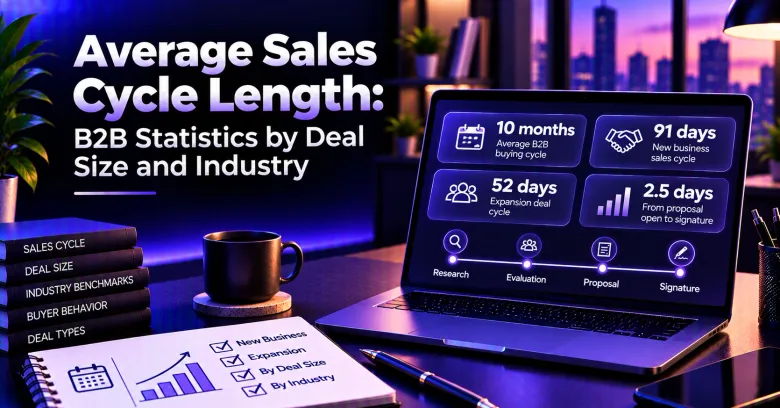
- 2.5 days is the average time from first open to a signed proposal (Proposify, 2026).
- 16 interactions per person with the winning vendor during a purchase (6sense, 2025).
The Sales Follow-Up Myths You Should Stop Quoting
Before the real data, it is worth knowing exactly which numbers to drop.
The Famous Figures
The most widely shared set of follow-up statistics usually appears as an image credited to the “National Sales Executive Association”. It claims that:
- 48% of salespeople never follow up with a prospect.
- 25% make a second contact and stop.
- 12% make three contacts and stop.
- Only 10% make more than three contacts.
- 2% of sales are made on the first contact, rising to 80% on the fifth to twelfth contact.
What Happened When Someone Checked
In August 2014, VentureBeat writer Stewart Rogers investigated the source. He found no trace of a National Sales Executive Association in search results, business registers or the US tax authority’s records. His conclusion was blunt: the statistics are made up and the organisation does not exist.
Why the Myths Persist
The figures are memorable, they support something sellers already believe and they are easy to paste into a slide. More than a decade after the investigation, many articles that rank for follow-up statistics still repeat them without a source date or link.
Quoting them carries a cost. Buyers and executives increasingly check claims with AI tools, and a debunked statistic in your pitch damages credibility you need later. Use the sourced figures below instead.
Follow-Up Statistics From Real B2B Email Data
Two large datasets give a much clearer picture of what follow-ups achieve.
Follow-Ups Lift Reply Rates From 3% to 4.9%
Hunter’s State of Cold Email 2025 analysed 11 million cold emails sent in 2024. Campaigns that included follow-ups achieved a 4.9% reply rate, against 3% for campaigns without them. The average reply rate across all campaigns was 4.1%.
That is a lift of more than 60% from the follow-ups alone.
Smaller Campaigns Get Twice the Replies
In the same study, campaigns sent to 50 or fewer recipients averaged a 5.8% reply rate (Hunter, 2025). Campaigns sent to more than 1,000 recipients averaged 2.1%.
Volume dilutes relevance. A short list of well-researched prospects beats a long list of names, and the follow-ups to that short list can be specific enough to earn a reply.
Most Replies Come From Follow-Ups
Belkins’ 2025 study of 7,530,489 emails sent over 12 months found that follow-ups produced 58.6% of all replies, against 41.4% for the first email.
If you stop after one email, you are leaving more than half your replies unclaimed.
The First Email Still Has the Highest Reply Rate per Step
The first email had the highest reply rate of any single step, at 0.59% (Belkins, 2025). The third step replied at 0.30%, the fourth at 0.34% and the sixth at 0.28%.
Each individual follow-up earns fewer replies than the opener. Together, they earn more.
The Third Step Books the Most Meetings
Step three drove 35.6% of email-sourced meetings, more than the first and second steps combined (Belkins, 2025). Steps one and two together produced 46.4% of meetings, and steps three to five produced 53.5%.
Replies and meetings are not the same thing. Prospects who answer later in the sequence are often the ones ready to talk.
How Many Follow-Ups Are Enough?
On how many follow-ups to send, the real data replaces “follow up 12 times” with something more useful.
Three to Five Steps Is the Sweet Spot
Belkins identified three to five steps as the practical sweet spot for most B2B email sequences. Reply volume falls sharply beyond the fifth step, and the sixth showed minimal extra value.
Persistence Without Relevance Backfires
The gap between small and large campaigns in Hunter’s data shows that sending more is not the same as following up well. Each follow-up should add something: a relevant case study, an answer to a likely objection or a short summary for a colleague.
Follow-Up Is Part of a Long Conversation
6sense found that buyers averaged 16 interactions per person with the vendor they eventually chose. A follow-up is not a one-off chase. It is one of many touchpoints a buyer expects before deciding.
For the wording that turns these touchpoints into replies, see our guide to writing a follow-up email that gets replies.
Make every follow-up worth opening. Start free and send your next document as a trackable link so you know when to follow up.
Proposal Follow-Up Statistics: After You Hit Send
A proposal follow-up is different from cold outreach. The buyer asked for it and is already interested. These figures, from Proposify’s State of Proposals 2026, a benchmark of 742,137 proposals, show what happens next.
Buyers Open Proposals Within 34 Minutes
The average buyer opened a proposal 34 minutes after it was sent, twice as fast as the previous year (Proposify, 2026). A follow-up sent an hour later asking “Did you get it?” adds nothing.
Winning Proposals Close 2.5 Days After the First Open
The average time from first open to closed-won was 2.5 days (Proposify, 2026). If a proposal has been open for well over a week without a decision, something is blocking it, and a generic proposal follow-up will not move it.
Winning Proposals Are Viewed 12 Times
Winning proposals were viewed 12 times on average, against eight for losing proposals (Proposify, 2026). Buyers spent 25.3 minutes reading winners and 15.8 minutes reading losers.
Repeat views usually mean the proposal is circulating inside the buying group. That is the moment for a follow-up that offers to answer questions from the wider team.
More Than One Viewer Lifts Close Rates by 20%
When more than one stakeholder viewed a proposal, close rates rose by 20% (Proposify, 2026). A useful follow-up helps your champion bring others in, for example with a short summary they can forward.
Revisions Are a Buying Signal
Close rates rose by 18% after one round of revisions, 28% after two and 45% after three (Proposify, 2026). A buyer asking for changes is investing in the deal. A same-day turnaround on revisions is the most valuable follow-up you can send.
Speed After the Demo Matters Too
Optifai’s 2026 Pipeline Study of 939 B2B SaaS companies found that deals with a proposal sent within 24 hours of the demo closed 35% faster. The first follow-up after a demo should be the document itself.
Our step-by-step guide on how to follow up on a sales proposal turns these numbers into a cadence you can use.
What Makes a Follow-Up Work
The data points to a few principles that hold across cold outreach and proposals alike.
Follow the Buyer’s Behaviour, Not the Calendar
A follow-up timed to what the buyer did, such as opening the proposal again or scrolling to the pricing section, is more relevant than one sent on a fixed day. Knowing which actions to watch is the subject of our guide to buying signals in sales.
Add Something New Each Time
Each step should carry a new piece of value: a case study, a clarified price, a short summary for finance. Repeating the same ask with a new subject line trains the buyer to ignore you.
Help the Champion Sell Internally
Gartner’s research found that buying groups that reach consensus are 2.5 times more likely to report a high-quality deal, and that 69% of buyers want to validate what they have learned with a sales rep (Gartner, 2026). Follow-ups that make your champion’s internal job easier move deals faster than follow-ups that pressure them.
A company executive one-pager template gives your champion something short to share upwards.
Make the Next Step Easy
If the buyer is ready, let them act straight away. A short one-page quote template with signing built in turns a “yes” in a reply into a signed document the same day.
Sales teams can manage the whole sequence from one workspace with proposal software built for sales teams.
Turn follow-ups into signatures. Create a proposal your client can sign inside the link on the free plan.
The Final Word on Sales Follow-Up Statistics
The best-known sales follow-up statistics are fiction, but the real ones tell a similar story with better detail. Follow-ups produce most replies, the third step books the most meetings and three to five steps is enough for most sequences. After a proposal, buyers open fast, decide within days and reward sellers who respond to revisions quickly.
The common thread is relevance. A follow-up that answers a real question, at the moment the buyer is engaged, outperforms any fixed number of chasers. And when a buyer does say no, our guide on how to respond to a business proposal rejection shows how to keep the door open.
The easiest follow-up is the one you never have to send because the buyer signs the moment they are ready. That is why teams create and send proposals as trackable links with signing built in.
Frequently Asked Questions
Are the “80% of sales need five follow-ups” statistics real?
No. The figures are usually credited to the “National Sales Executive Association”, but a 2014 VentureBeat investigation found no evidence that the organisation exists. Use sourced data instead, such as Belkins’ finding that 58.6% of replies come from follow-ups.
How many follow-ups should a salesperson send?
Belkins’ 2025 study of more than 7.5 million emails found that three to five steps is the practical sweet spot for B2B sequences. Replies drop sharply after the fifth step, and the sixth adds little value.
Which follow-up step gets the best results?
The first email has the highest reply rate of any single step, but the third step drove 35.6% of email-sourced meetings in Belkins’ data, more than the first two steps combined. Later replies are often from prospects ready to meet.
When should I follow up on a sales proposal?
Buyers typically open a proposal within 34 minutes, and winning proposals close about 2.5 days after the first open. Follow up based on what the buyer does, such as repeat views, rather than on a fixed schedule, and turn revision requests around the same day.
What are reliable sources for sales follow-up statistics?
Reliable sales follow-up statistics come from studies that publish their dataset size and date, such as Hunter’s analysis of 11 million cold emails and Belkins’ study of 7.5 million emails. Avoid figures that cannot be traced to a named, verifiable organisation.