Table of contentsFirst: What is Sales Analysis?
Key takeaways
- Do sales analysis, not just tracking, because knowing how many deals closed last month is different from knowing why.
- Gather the right data across your sales funnel before you analyse anything.
- Organise and visualise your metrics by categorising findings, so the data makes sense at a glance.
- Proposal.biz adds proposal data to your analysis, with opens, scroll depth and time spent per section through trackable links, so you can see which proposals get real attention.
- Analyse what is working and what is not, turning insight into action instead of just describing what happened.
- Build an action plan from a few key takeaways, and automate what you can.
Most sales teams track results. Fewer actually analyze them.
It’s one thing to know how many deals you closed last month. It’s another to know why those deals closed, and why others didn’t.
That’s where sales analysis comes in. It helps you zoom out, spot patterns, fix what’s not working, and double down on what is. Done right, it’s one of the most powerful tools a sales team has. Not just for hitting targets, but for improving everything from lead quality to the proposals you send out.
If you’re already using a proposal builder tool, it’s a great place to connect the dots. Analyzing sales performance metrics can give you insights that go beyond just the numbers.
This is the roadmap to execute a detailed and comprehensive sales analysis for free.
First: What is Sales Analysis?
Sales analysis is about digging into your sales data to figure out what’s working, and what isn’t.
It could be as simple as noticing that Q2 deals took twice as long to close. Or as specific as realizing that your conversion rate jumps when proposals include certain case studies. It’s not just about numbers. It’s about meaning.
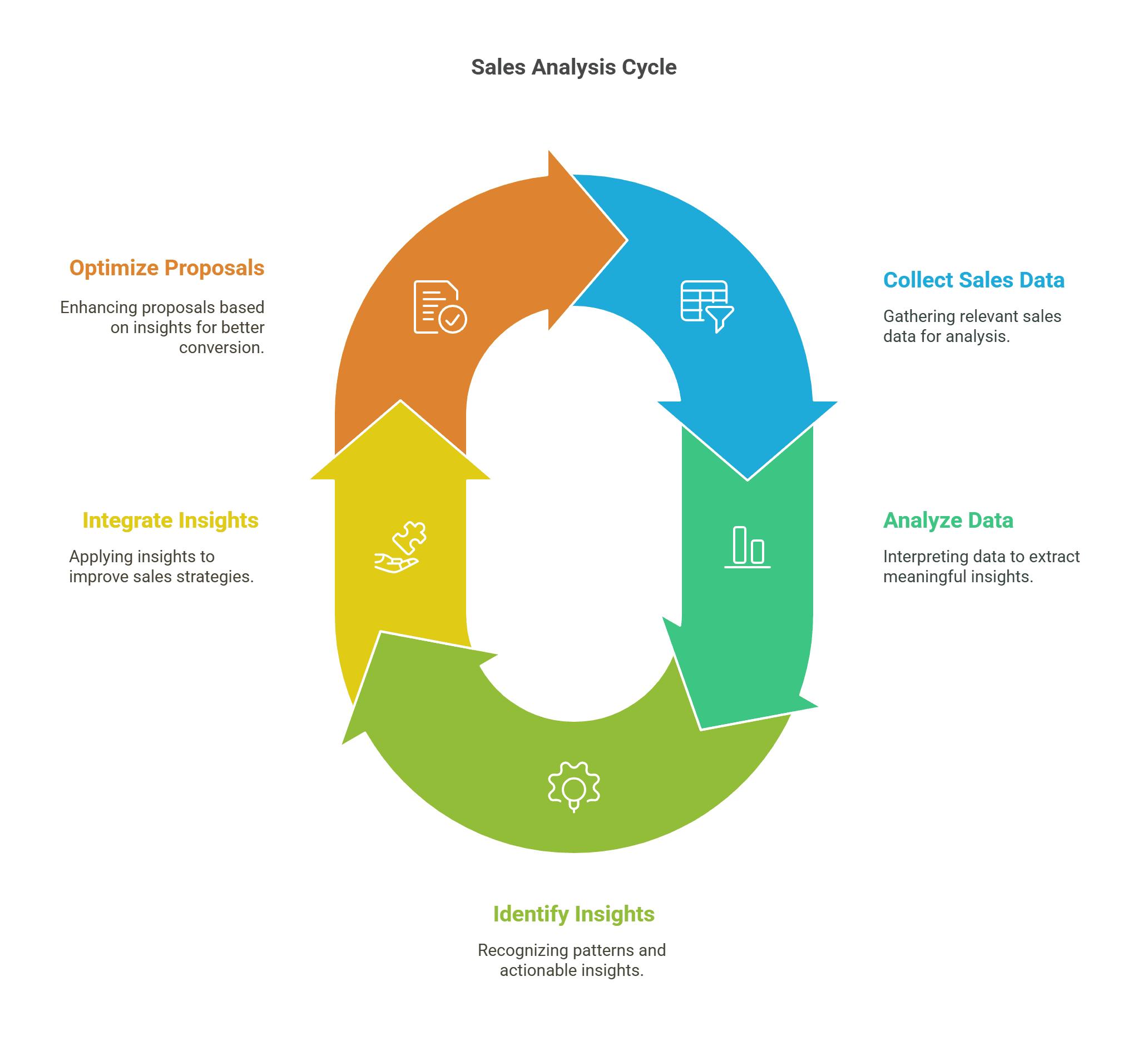
A typical sales analysis can help you figure out:
- Where your best leads are coming from
- Which reps are closing fastest (and why)
- What’s driving average deal value up or down
- What kinds of deals are getting stuck, or lost altogether
- How pricing, timing, or content affects close rates
And here’s where proposal building comes in: proposals are often the final push in the sales process, and analyzing them gives you huge clues about buyer behavior. Maybe proposals with ROI breakdowns convert better. Maybe your approval process takes too long and causes delays. These are insights you only get when you bring sales analysis into your content workflows.
The good news is that if you’re already using a proposal builder tool with analytics or template tracking, you’re halfway there. That’s data you can actually use to get better at selling, not just faster, but smarter.
Why Sales Analysis Isn’t Optional Anymore
Let’s be honest, in 2025 only fools would be neglecting sales analysis. In fast-moving B2B environments, it’s easy to focus on new leads and active deals while letting analytics slide. But without analyzing how your sales process is performing, you’re flying blind. You don’t know what’s working, what’s broken, or which efforts are driving real ROI.
A detailed sales analysis brings clarity. It shows you:
- Which lead sources are converting best
- How well your team is performing
- What your average deal value is
- Where you’re losing potential revenue
- What content (like proposals) drives faster closes
And before you begin, make sure your sales goals are clearly defined. You need to know what you’re optimizing for. Are you trying to shorten your sales cycle? Increase deal size? Improve win rates? Your analysis should be tied to your biggest growth priorities.
Step 1: Gather the Right Sales Data
Start by collecting a comprehensive set of data points across your sales funnel. A strong sales analysis covers both quantity and quality. Don’t stop at revenue totals. Dig deeper.
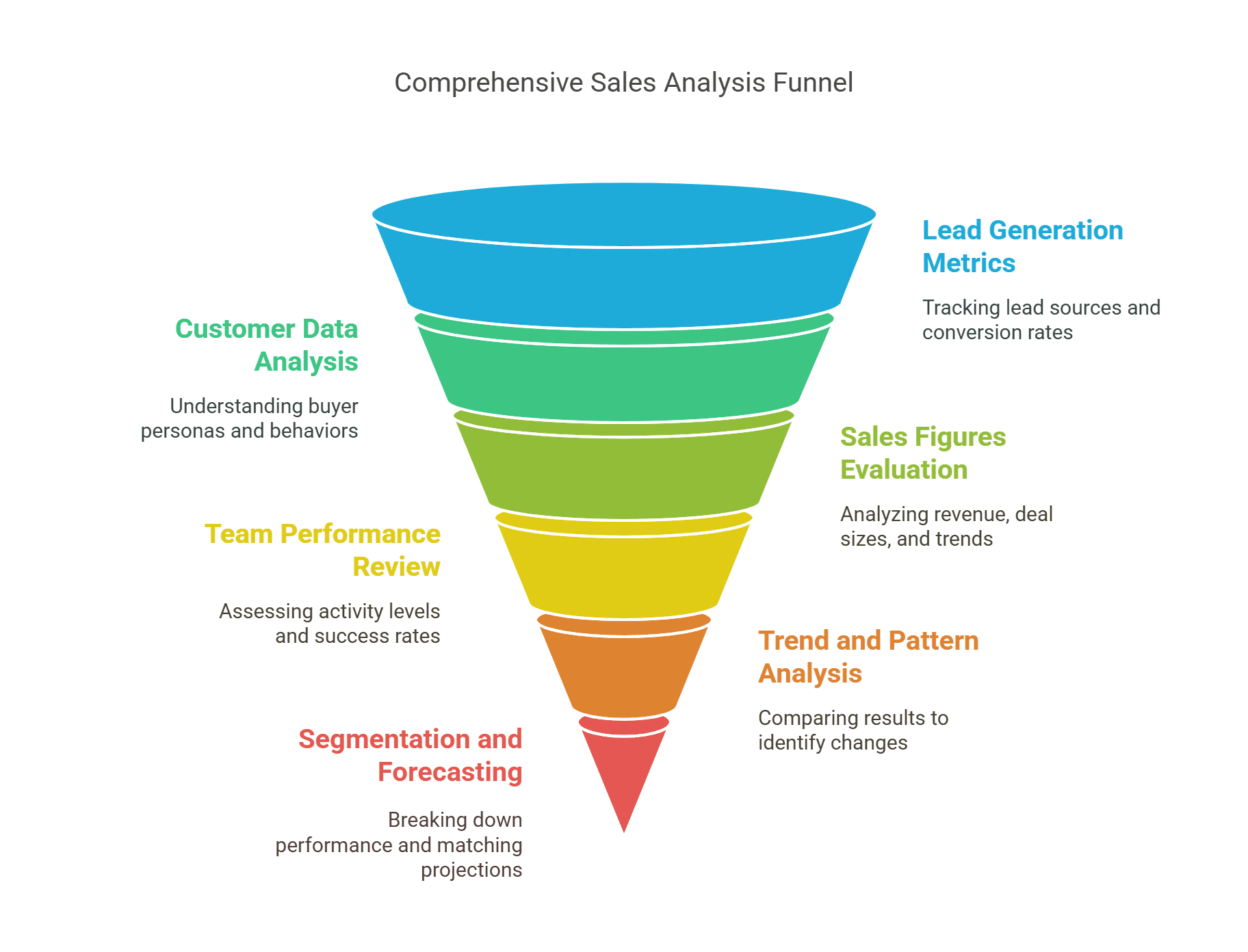
Here’s what to include (as seen in the reference image):
- Lead generation metrics: Track where your leads are coming from and how qualified they are. Analyze conversion rates per channel.
- Customer data: Understand buyer personas, industry segments, and purchase behavior.
- Sales figures: Total revenue, average deal size, win/loss rates, and monthly or quarterly trends.
- Sales team performance: Review activity levels, call/email success rates, and proposal output.
- Trends and patterns: Compare results to the previous year or quarter. Look for spikes or dips.
- Segmentation analysis: Break down performance by region, product, or deal size.
- Forecasts: How does your current pipeline match your projections?
Include win-loss analysis here. Understanding why you win or lose deals is one of the most underutilized pieces of the sales puzzle. Use your proposal builder tool to tag lost opportunities by reason, review proposal content changes, and compare with successful outcomes.
Step 2: Organize and Visualize Your Metrics
Once you have your data, you need to make sense of it.
Start by categorizing your findings. Separate metrics into top-of-funnel (leads), mid-funnel (sales activity), and bottom-of-funnel (closed deals, revenue). This helps you identify where performance drops off.
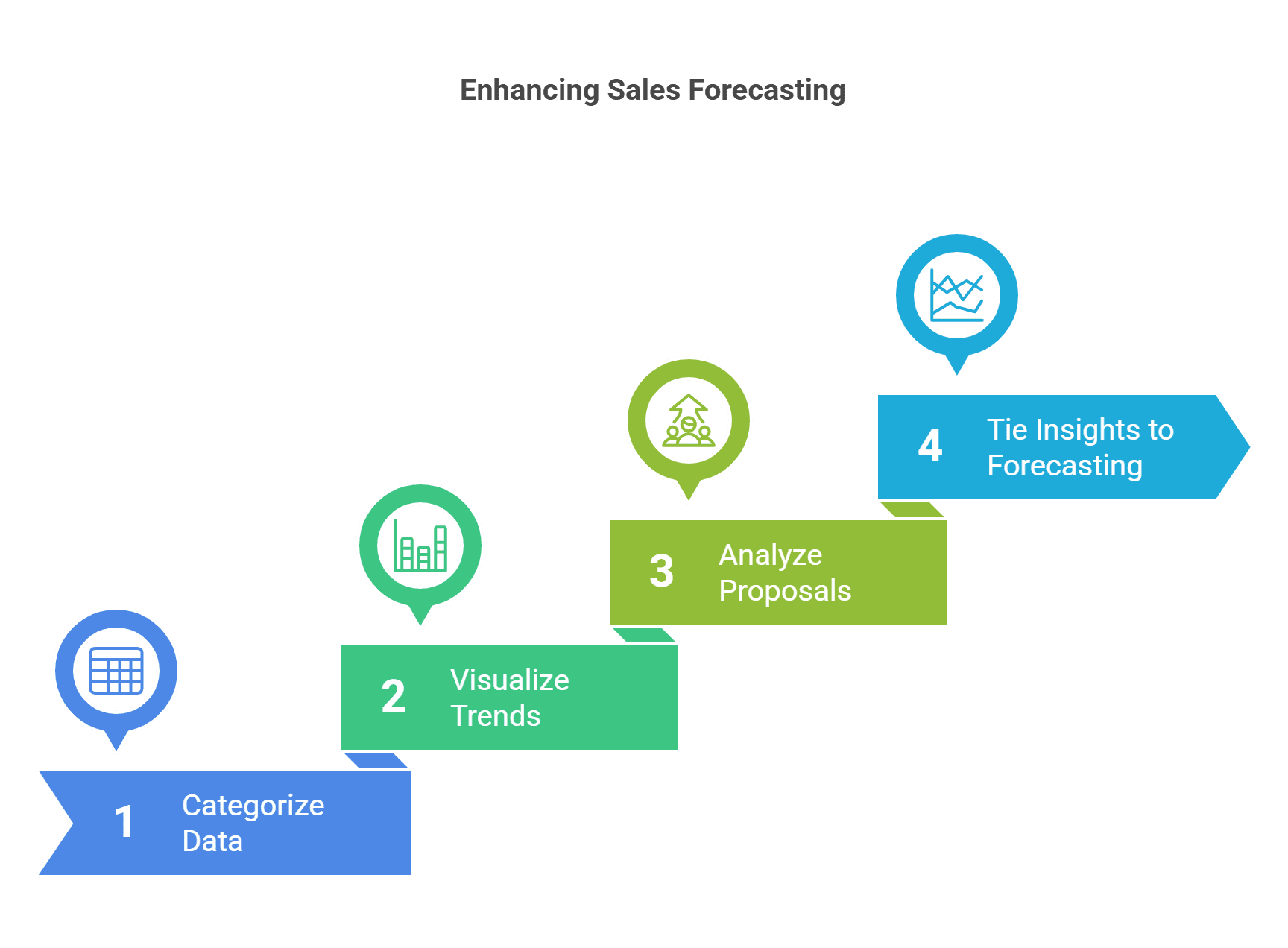
Here are some smart ways to visualize and spot trends:
- Line graphs for revenue over time
- Bar charts for team performance comparisons
- Funnel diagrams to show conversion percentages between stages
- Heatmaps to highlight high-performing customer segments
Your proposal analytics can add value here too. Use your Proposal Builder tool to track which proposals were opened, how quickly they were signed, and which reps closed faster using certain templates. A great Proposal Builder feature is tracking real-time interaction data: when a proposal is viewed, for how long, and which sections get attention.
Also, tie these insights to your sales forecasting. Are your close rates improving? Do shorter proposal cycles translate into faster revenue recognition? Forecasting becomes more reliable when it’s based on repeatable patterns, and your sales analysis is the foundation.
Step 3: Analyze What’s Working and What’s Not
This is where insight turns into action.
You’re not just looking at what happened. You’re asking why it happened. For example:
- Are deals stalling after the proposal stage?
- Are certain reps consistently closing faster?
- Are you getting better results with a specific template or pricing model?
- Which proposals or content pieces led to ghosting vs. closing?
Cross-reference sales data with your proposal content and delivery process. If you’re using a structured Proposal Builder tool, it becomes easier to identify patterns across deals.
Let’s say you discover that personalized proposals with detailed ROI sections have a 40% higher close rate. That’s gold. It tells you that using dynamic content blocks, a common Proposal Builder feature, could be a direct lever for improving performance.
Similarly, if deals from inbound leads are taking too long to close, it might indicate poor proposal follow-up or unclear positioning.
Collaborative tools matter here. One feature mentioned in the Close blog is cross-functional alignment, getting marketing, sales, and operations on the same page. Your Proposal Builder should support comments, version control, and multi-user access to ensure feedback loops stay tight and accurate.
Step 4: Build an Action Plan (and Automate What You Can)
Your analysis should now point you toward a few key takeaways. These might include:
- Which lead sources are worth doubling down on
- What proposal strategies increase win rates
- Where your sales cycle is getting stuck
- What content or messaging needs refinement
Now it’s time to act. Prioritize 2–3 improvements and put them into motion.
If proposals are slowing you down, implement a Proposal Builder tool with features like:
- Template libraries: So reps aren’t creating from scratch every time, starting from a sales proposal template
- Approval workflows: To speed up reviews
- Content analytics: To see what’s working in your proposals
- CRM integrations: To auto-fill client data into proposals
- Collaborative editing: So teams can work together in real time
Sales analysis should not end in a spreadsheet. It should end in a cleaner process, faster output, and better revenue results.
Sales analysis is not about looking backward. It’s about identifying the bottlenecks that are costing you revenue, and fixing them. The most successful teams don’t just review numbers. They use them to build smarter, more scalable sales engines.
When combined with a purpose-built Proposal Builder tool, your sales analysis becomes actionable, and a strategic business action plan keeps the next steps on track. You’re no longer guessing which proposal content performs best. You know. You’re not wondering if your slow turnaround is hurting close rates. You can see it in the data.
And the moment you align sales analytics with proposal performance, you’re in control of more than just your numbers. You’re in control of your outcomes.
We’re building the kind of proposal platform we wish we had. One where sales data and content performance work together to help teams win faster, smarter, and without the chaos.
Follow us on LinkedIn for a first look at what’s coming next.