Table of contentsThe One Document That Separates Successful Projects from Expensive Nightmares
Key takeaways
- Write a business requirements document so a signed proposal does not drift into mismatched expectations, patchy execution and endless email threads.
- Recognise that a proposal is not a BRD: moving into development on a proposal alone leaves requirements too vague to build against.
- Define project scope as boundaries, covering what the software should do and, just as importantly, what it should not do.
- Explain the business objectives and the 'why' before you list features, so everyone knows what problem the software solves.
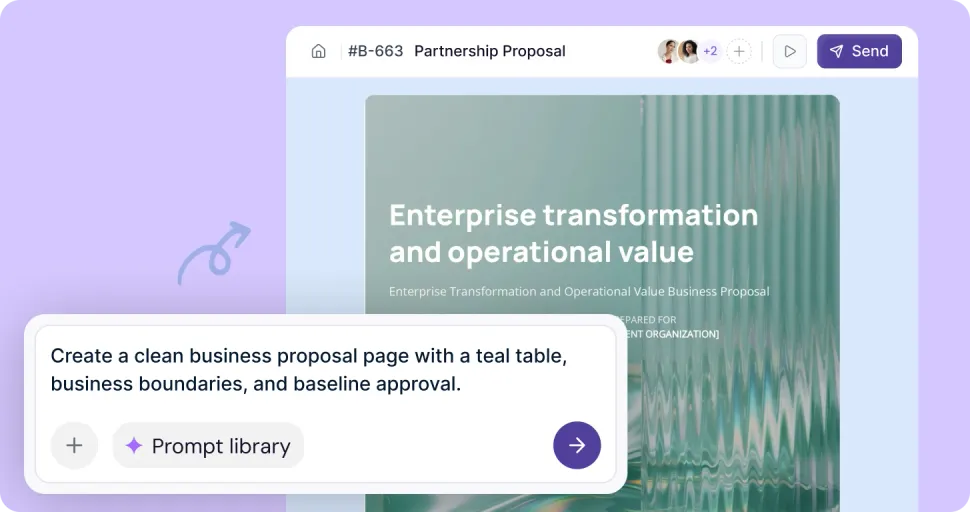
- Proposal.biz drafts and designs a BRD from a prompt in your brand style, with smart blocks for sections such as scope, deliverables and acceptance criteria.
- List functional requirements as a checklist of must-have features in clear, simple terms, and cover performance and scalability separately.
- Write acceptance criteria that define exactly what must be met, so a client cannot later say 'this isn't what I expected'.
Why Your Sales Process Needs a Business Requirements Document in Software Development
One question we can’t resist asking anyone who joins our team is this:
“Have you ever worked on a software project that turned into a complete disaster?”
The answers are almost always the same.
- “The client kept changing their mind.”
- “The dev team built something totally different from what was expected.”
- “We spent months going back and forth on scope changes.”
And here’s what’s really shocking. Most people don’t even realize what caused the chaos.
It wasn’t bad coding.
It wasn’t a difficult client.
It wasn’t even a lack of talent.
It was a broken process from the very start.
A proposal was signed. A kickoff call happened. And then, somewhere in the blur of expectations, execution, and endless email threads, things started falling apart.
Why? Because no one took the time to write a proper Business Requirements Document (BRD).
If this sounds painfully familiar, don’t worry. You’re not alone. But by the end of this article, you’ll know exactly why a business requirements document in software development is the missing link between “good intentions” and “actual results”.
The One Document That Separates Successful Projects from Expensive Nightmares
We get it: documentation can feel tedious. It seems like an extra step, something to “figure out later.” But in software development, skipping or rushing a BRD is like what the French would call a faux pas.
A business requirements document in software development is, plainly put, not a skippable step. It’s the bridge between what a client wants and what the developers will build. It prevents those nightmare scenarios where teams realize, too late, that their assumptions were totally off.
A good BRD strikes the right balance: clear, structured, and actionable.
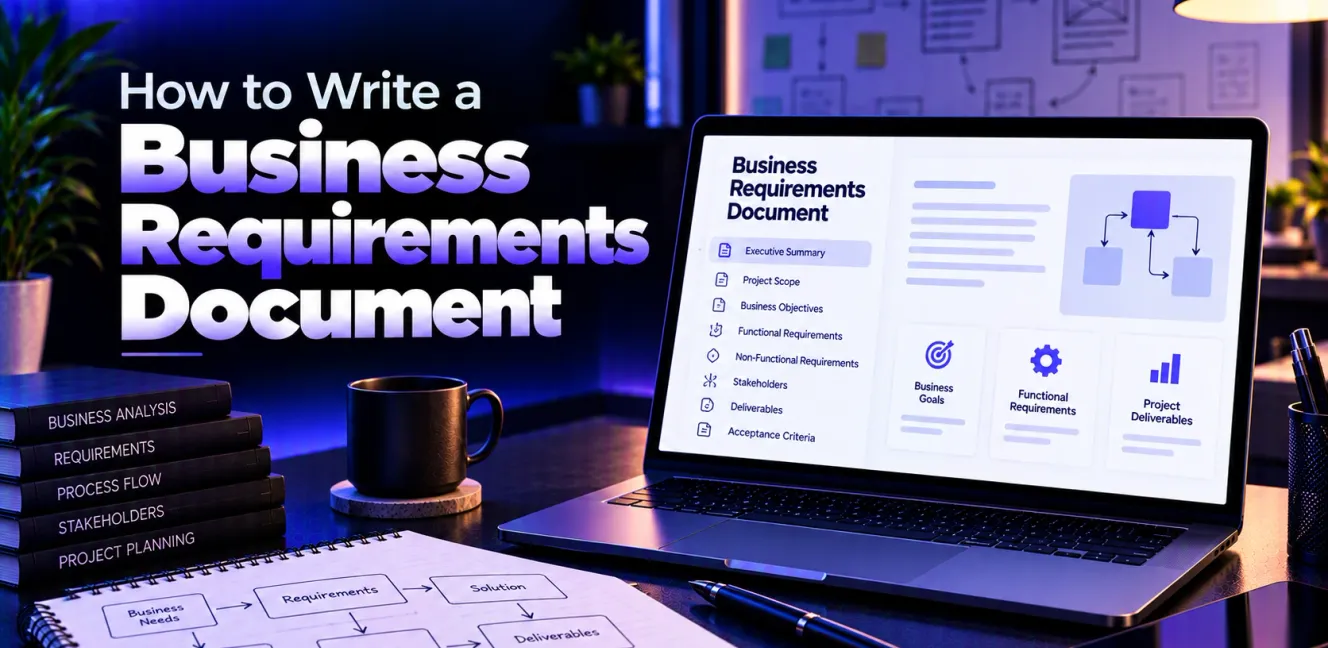
Here’s what every solid BRD should include:
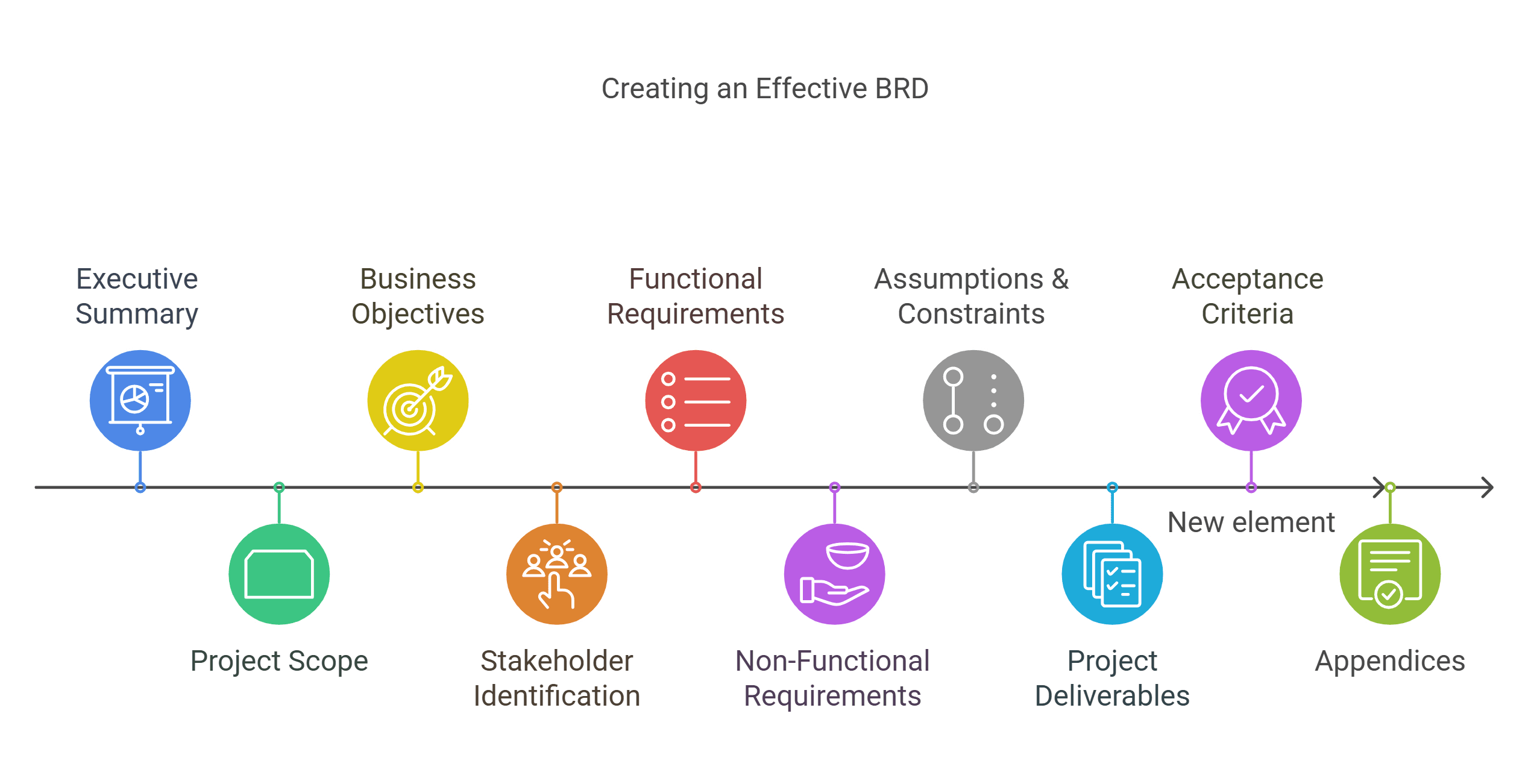
1. Executive Summary
Start with a simple, straight-to-the-point overview. Why does this project matter? What problem are we solving? This section sets the stage for everything that follows.
2. Project Scope
This is where you define boundaries. What is the software expected to do? Just as importantly: what is it NOT supposed to do? Clearly outlining this helps avoid “Oh, can we also add this?” moments that derail projects.
3. Business Objectives
No one builds software just for fun (well, most don’t). A BRD should clearly explain what the business wants to achieve. Are we improving efficiency? Cutting costs? Enhancing customer experience? If the objective isn’t clear, neither will the solution be.
4. Stakeholder Identification
A great BRD acknowledges everyone who has a stake in the project: developers, product managers, sales teams, end users. It defines their roles so there’s no confusion about who does what.
5. Functional Requirements
This section lists the must-have features in clear, simple terms. Think of it as a checklist for developers. Each feature should be detailed enough to guide execution but not so complicated that it reads like a legal document.
6. Non-Functional Requirements
Performance, security, scalability: these things don’t always get the spotlight, but they matter just as much as the core features. This section ensures that the software won’t just work but will work well under real-world conditions.
7. Assumptions & Constraints
Every project comes with assumptions (e.g., “The client will provide data by X date”) and constraints (e.g., “We only have a three-month timeline”). Writing these down makes sure no one forgets them when roadblocks inevitably appear.
8. Project Deliverables
Deliverables are the tangible results expected from the project: mockups, prototypes, reports, fully functional software. Having them listed out helps everyone stay aligned on expectations.
9. Acceptance Criteria
Ever had a client say, “This isn’t what I expected”? Acceptance criteria prevent that by defining exactly what must be met for the project to be considered successful.
10. Appendices
A section for supporting info: glossaries, references, diagrams, technical constraints. Anything that adds clarity goes here.
A well-written BRD keeps teams aligned, projects on track, and clients happy. Skimp on it, and you’ll end up with delays, endless revisions, and frustrated stakeholders.
Why a Proposal Isn’t a BRD (and Why That’s a Huge Problem)
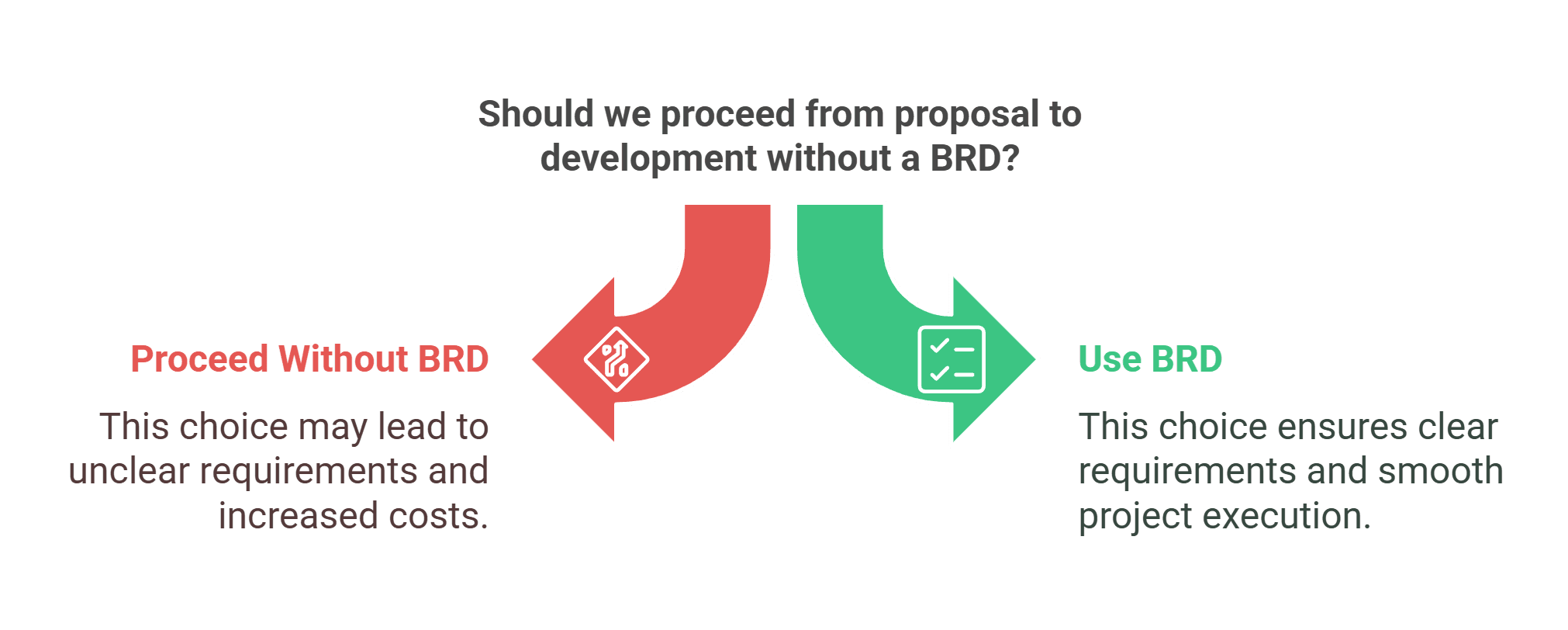
Many companies think a proposal is enough to move forward with development. It’s not.
| Proposal | Business Requirements Document (BRD) |
|---|---|
| A high-level sales document meant to win the deal | A detailed execution plan meant to deliver the right product |
| Includes pricing, scope, and timelines | Defines user needs, business goals, and functional specs |
| Often flexible and negotiable | Needs to be precise to avoid scope creep |
| Created before deal closure | Created after deal closure, before development starts |
The problem? When businesses jump from proposal to development without a business requirements document, they hit roadblocks:
- Unclear requirements lead to constant revisions
- Stakeholders change their minds mid-project
- Projects take twice as long and cost more than expected
A well-structured BRD eliminates these issues before they start, and it hands over cleanly to a software development proposal.
How to Write a Business Requirements Document That Actually Speeds Up Sales and Development
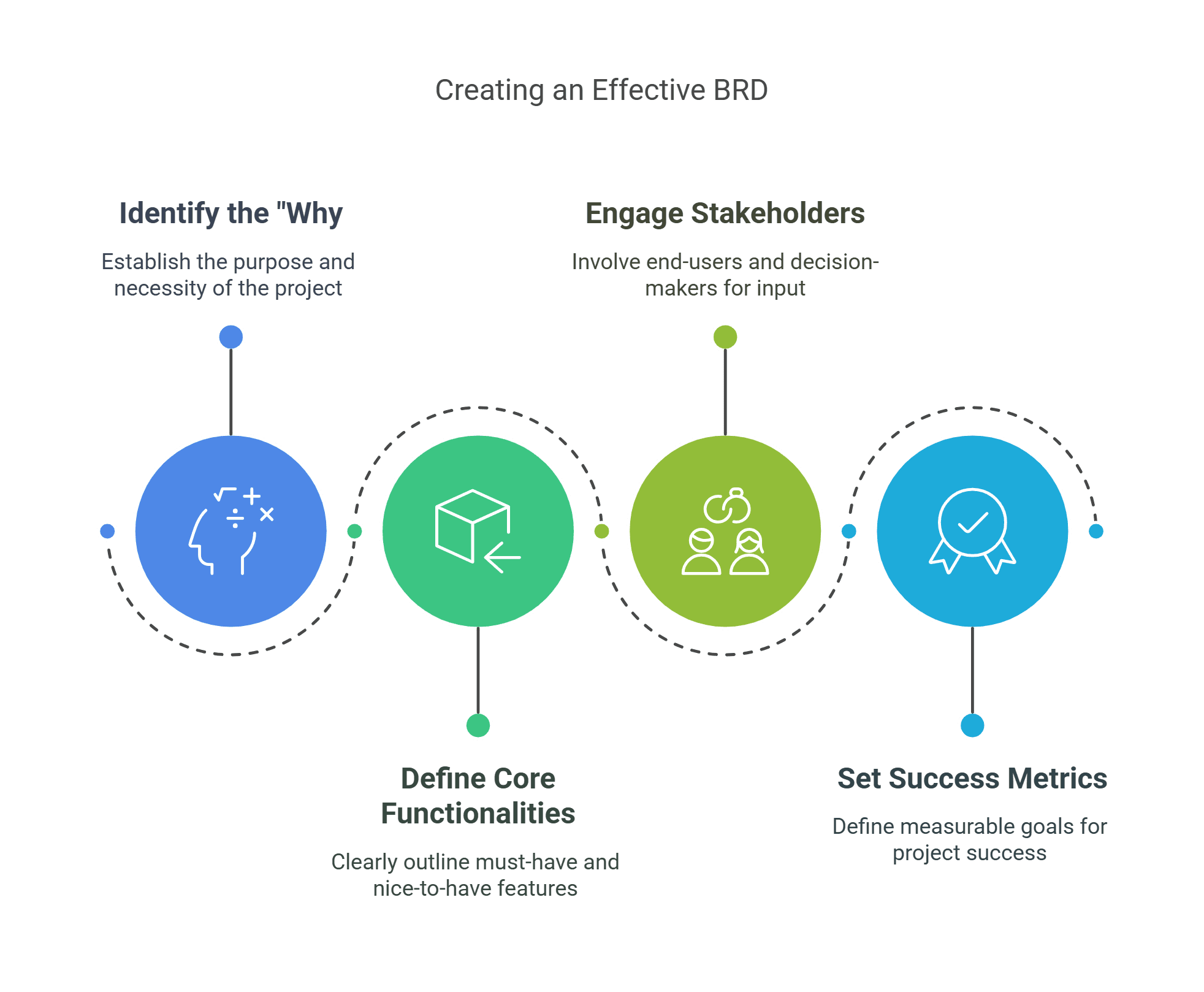
Most BRDs are either too vague (causing confusion) or too rigid (leaving no room for iteration). Here’s how to get it right.
1. Start with the “Why”
Before you define what the software does, explain why it needs to exist.
- What problem are we solving?
- How does this solution fit into the business’s long-term goals?
- What happens if we don’t build it?
This section is critical for getting executive buy-in.
2. Define the Core Functionalities (And What’s NOT Included)
The best BRDs are crystal clear on what’s included and what isn’t, the same discipline a software development SOW needs.
- Must-have features: The core functions that are non-negotiable
- Nice-to-have features: Features that can be added later
- Explicit exclusions: What the software will not do (to prevent scope creep)
Example: If you’re building an AI chatbot, don’t just say, “AI-powered assistant.” Define:
- It can answer FAQs and book appointments
- It won’t handle real-time voice commands (for now)
3. Get Input from the Right Stakeholders
A common mistake? Business requirements documents are written without talking to the people who will actually use the software.
To prevent this:
- Interview end-users (customer support, sales teams, developers)
- Define user stories (e.g., “As a support agent, I need to search past chat logs instantly”)
- Align with decision-makers early so there are no surprises later
The fewer surprises, the smoother the sales process.
4. Define Measurable Success Metrics
Instead of saying, “The software should improve efficiency,” define what that means:
- Decrease customer response time from 4 hours to 30 minutes
- Reduce manual data entry by 60 percent
- Achieve 99.9 percent uptime within the first three months
The best BRDs give both the business team and developers a clear way to measure success.
Final Thoughts: The BRD Is Your Best Sales Tool
If you’re struggling with:
- Sales cycles dragging on too long
- Clients changing requirements mid-project
- Software development teams constantly frustrated with unclear goals
Then the problem might not be your sales or development team, it’s most likely your process.
Sure, a solid BRD helps with software execution, but more importantly, it makes the entire sales and delivery process smoother.
And that’s exactly why we’re building Proposal.biz.
Read: How to Respond to a Business Proposal Rejection Email
We’re Creating the Ultimate Sales & Documentation Platform, and We Need Your Input
Right now, most proposals and business requirements document software still don’t solve these issues the way they should. They’re clunky, rigid, or too generic.
At **Proposal.biz, we’re developing a smarter solution, one that actually solves these pain points.
**We want to build it with you, for you.
- Want to help shape the future of proposal and BRD management?
- Join us now: sign up and tell us what you need.
Sign up to be part of the future of smarter software documentation.
The TL;DR (Because We Know You’re Busy)
- BRDs prevent scope creep, misunderstandings, and failed projects.
- Honeywell’s success story proves that detailed requirements documentation is crucial.
- A proposal is not a BRD. If you skip this step, expect trouble.
- A strong BRD equals a faster, smoother sales and development process.
- Proposal.biz is coming to fix this mess. Sign up to help shape the solution.
Your next big project shouldn’t fail because of bad documentation. Let’s fix it together.