
Table of Contents
Sales Order vs Invoice: What’s the Difference?
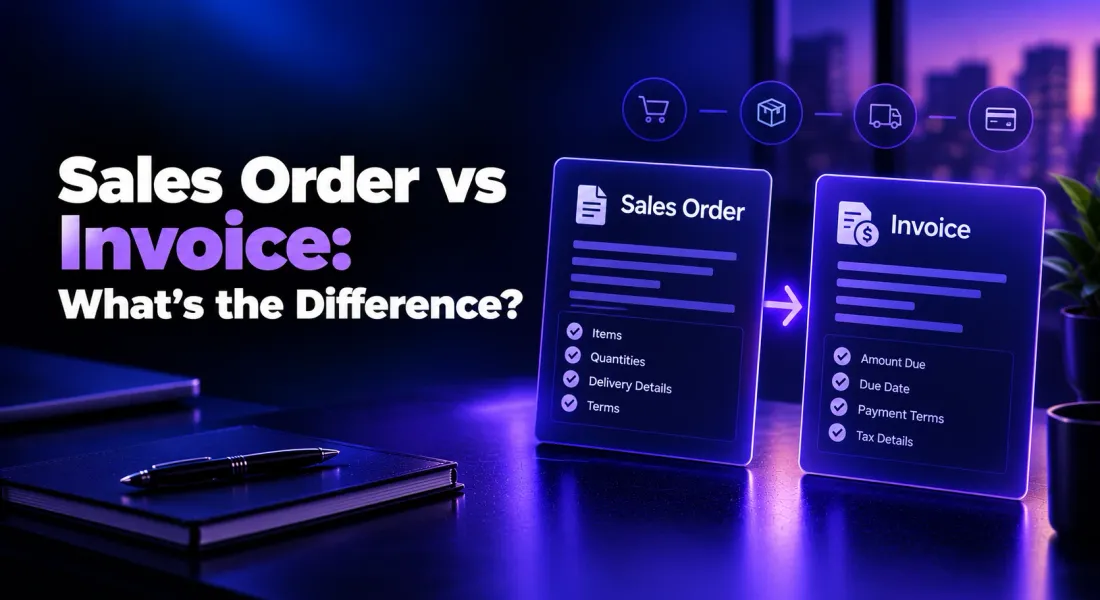
A sales order confirms what a seller has agreed to deliver to a customer, before the goods or services are provided. An invoice asks the customer to pay for what has been delivered, and becomes the record used in accounting. In short, the sales order starts fulfilment; the invoice starts payment.
The difference between sales order and invoice sounds simple, but it causes real confusion in practice. Small business owners regularly ask why their accounting software jumps straight from quote to invoice with no sales order at all. Finance teams chase payments that are delayed because an invoice did not match the customer’s order. And people mix up sales orders with purchase orders, which are the same transaction seen from the other side.
This guide explains what each document does, how they fit together with quotes and purchase orders, when you need a sales order at all, and the mistakes that delay payment.
Sales Order vs Sales Invoice at a Glance
| Sales order | Sales invoice | |
|---|---|---|
| Purpose | Confirms what will be delivered | Requests payment for what was delivered |
| When it is issued | After the customer agrees to buy, before delivery | At or after delivery, or at agreed billing points |
| Who uses it most | Sales, operations, warehouse, delivery teams | Finance and the customer’s accounts payable team |
| Triggers | Fulfilment: picking, scheduling, production | Payment and the accounting entry |
| Affects accounts | Usually not until invoiced | Yes, it records the sale and the amount owed |
| Includes payment due date | Sometimes, as part of terms | Always |
Turn approved quotes into signed agreements in one link. Create your first quote free.
What a Sales Order Does
A sales order is the seller’s confirmation of a customer’s order. It is created once the customer has agreed to buy, usually after accepting a quote or sending a purchase order.
It Confirms the Details Before Anything Ships
The sales order spells out exactly what was agreed: products or services, quantities, prices, delivery dates and terms. Sending it to the customer gives them a chance to spot mistakes before anything is produced or shipped.
Catching an error at this stage costs an email. Catching it after delivery costs a return, a credit note and an awkward conversation.
It Tells Your Team What to Do
Internally, the sales order is an instruction. It tells the warehouse what to pick, production what to make, or the delivery team what to schedule. For service businesses, it can trigger resourcing and project kick-off.
Without a sales order, those instructions travel by email and memory, which is exactly how the wrong quantity or the wrong delivery date reaches a customer.
It Reserves Stock or Capacity
In businesses that hold inventory, a confirmed sales order often reserves stock so it is not sold twice. In service businesses, it reserves people’s time in the schedule.
This is one of the main reasons businesses with inventory adopt sales orders. Selling the same stock twice is an expensive and embarrassing mistake to fix.
What a Sales Order Usually Includes
- Sales order number and date
- Customer details and, if they sent one, their purchase order number
- Items or services, quantities and agreed prices
- Delivery address, method and expected date
- Payment terms that will apply to the invoice
What an Invoice Does
An invoice is the seller’s request for payment. It is issued when goods are delivered, when services are completed, or at agreed points such as project milestones.
It Requests Payment on Agreed Terms
The invoice tells the customer how much they owe, by when and how to pay. It is the document their accounts payable team processes, so it needs to match what they expect to the line.
Clear payment terms on the invoice, such as “due within 30 days of the invoice date”, prevent arguments about when the clock started.
It Creates the Accounting Record
For the seller, the invoice records the sale and the amount receivable. For the customer, it records the amount payable. It is also the document used for tax purposes in most places, which is why invoice numbering and content are often regulated.
What an Invoice Usually Includes
- Unique invoice number and invoice date
- Seller and customer details, including any tax registration numbers required where you operate
- The customer’s purchase order number, if they use them
- Items or services delivered, quantities, prices and taxes
- Total due, payment terms, due date and payment methods
Is a Sales Order the Same as an Invoice?
No. A sales order is the same transaction at an earlier stage: it confirms what will happen. An invoice records what did happen and asks for payment. So is sales order same as invoice in practice? Only in the rare case where everything happens at once, such as an order that is paid and delivered on the spot.
The confusion is understandable. Some simpler accounting tools do not have a separate sales order document at all, and users in small business forums describe workarounds such as creating a draft invoice from a quote and treating it as a sales order until delivery.
That works for very small operations, but it blurs two different moments. As soon as you have partial deliveries, back orders or several people involved in fulfilment, a proper sales order makes life much easier.
Where Sales Orders and Invoices Fit in the Sales Process
For a typical B2B sale of goods, the documents follow a clear sequence. Each one answers a different question.
1. Quote or Proposal
The seller sets out what they can provide and at what price. Nothing is agreed yet.
If you are unsure whether to send an estimate or a quote, this guide to the difference between an estimate and a quote explains when each fits.
2. Purchase Order
The customer formally confirms they want to buy, often on their own form with their own reference number. Many larger customers require a purchase order before they will pay any invoice.
If a customer uses purchase orders, treat the PO number as essential information. You will need it on the invoice later.
3. Sales Order
The seller confirms the order back to the customer and instructs their own team to fulfil it.
It is also the point at which you can catch differences between what the customer asked for and what you quoted, before anything is produced.
4. Delivery Note or Completion
Goods are delivered or work is completed, often with a delivery note or sign-off that confirms what was received.
A signed delivery note or a written sign-off is useful evidence if the customer later disputes what was received.
5. Invoice
The seller bills the customer for what was delivered, referencing the sales order and the customer’s purchase order number.
Matching the invoice to the order and the customer’s PO is what lets their accounts team approve it without questions.
6. Payment and Receipt
The customer pays, and the seller records the payment against the invoice.
Service businesses often compress these steps. A signed proposal or statement of work can act as the order confirmation, and invoices follow at milestones or monthly.
Recording the payment against the specific invoice keeps your outstanding balances accurate and makes chasing late payments far easier.
Sales Order vs Purchase Order
These two are often confused because they describe the same deal. The difference is who creates them.
| Purchase order | Sales order | |
|---|---|---|
| Created by | The buyer | The seller |
| Purpose | States what the buyer wants to purchase | Confirms what the seller will deliver |
| Comes | First, as the buyer’s request | Second, as the seller’s confirmation |
| Used for | The buyer’s approval and spending control | The seller’s fulfilment and tracking |
A practical tip from people who deal with larger customers: always ask whether they use purchase orders, and put their PO number on your sales order and invoice. Invoices without it are often held in the customer’s system, which delays payment through no fault of the work.
One Order, Many Invoices: How They Relate in Practice
The relationship between sales orders and invoices is not always one to one. Understanding the common patterns prevents billing errors.
Partial Deliveries
If an order of 500 units ships in two batches, one sales order can produce two invoices, one for each delivery. Each invoice should reference the original sales order so the customer can reconcile them.
Clearly show what has been invoiced so far and what remains, so the customer is never billed twice for the same items.
Milestone Billing
Project-based work often has one order and several invoices tied to milestones, such as a deposit, a mid-point payment and a final payment.
Agree the milestones and amounts in the order or contract up front. Invoices then simply follow the plan, rather than becoming a negotiation each time.
Several Orders From One Quote
Some customers accept one quote and then place several orders against it over time. Users of business software often ask how to keep quote and order numbering separate for exactly this reason.
Reference the original quote on every sales order, and track how much of the quoted quantity or value has been ordered so far, so neither side is surprised when the quote is used up.
Billed Is Not the Same as Paid
A sales order marked “fully billed” means every item has been invoiced, not that the customer has paid. Track payment status on the invoice, not the order.
Mixing the two up leads to awkward conversations: chasing a customer for an invoice they already paid, or assuming money has arrived when it has not.
Do You Need Sales Orders?
You Probably Do If
You sell physical goods, hold stock, deliver in batches, have several people involved in fulfilment, or work with customers who send purchase orders. A sales order keeps everyone working from the same agreed details.
Even small product businesses benefit once more than one person handles orders, because the sales order becomes the single source of truth for what was agreed.
You May Not If
You sell services, bill on completion and work with a small team. In that case, a clear proposal or quote that the client signs often does the job of a sales order: it records exactly what was agreed before work starts.
For services, a signed proposal and a separate contract usually cover what a sales order would. This guide to proposal vs contract explains how the two fit together.
4 Mistakes That Delay Payment
Invoicing Before the Order Is Confirmed
Sending an invoice for something the customer has not formally confirmed invites disputes. Confirm the order first, then bill.
For services, the equivalent mistake is starting work and billing without a signed proposal or statement of work.
Numbers That Do Not Match
If the quote says one price, the order another and the invoice a third, the customer’s accounts team will stop and ask. Every mismatch adds days or weeks to payment.
Generate each document from the previous one rather than retyping it. Most mismatches come from manual re-entry, not from deliberate changes.
Missing the Customer’s Reference
Invoices without the customer’s PO number or cost centre are often parked until someone matches them manually. Ask for the reference at the order stage.
Some larger customers also require invoices to be submitted through a supplier portal or to a specific accounts address. Ask how they want to receive invoices when you take the order, not when payment is late.
Treating Every Document as Interchangeable
Sending a quote labelled as an invoice, or an invoice before delivery labelled as a sales order, confuses the customer’s processes. Use each document for its purpose.
Send quotes clients can accept and sign in one link. Start free.
Clear document titles and numbering (Q for quotes, SO for sales orders, INV for invoices) help both sides keep track.
How to Keep Quotes, Orders and Invoices Consistent
Most payment delays come from inconsistency between documents created at different times by different people. The fix is to generate each document from the same agreed details rather than retyping them.
Proposal.biz helps at the front of that chain. You can create and send quotes from a content library that holds your current services and prices, so the numbers start correct.
When the client accepts, they sign inside the same document. Signing records the signed status and date, and both parties receive a confirmation email, which gives your team a clear, dated record of what was agreed before any order or invoice is raised.
For quoting at scale with complex product rules, our explainer on what CPQ software is covers when a dedicated tool makes sense.
Final Word on the Sales Order and Invoice Difference
The sales order and invoice difference comes down to timing and purpose. A sales order confirms what will be delivered and tells your team what to do. An invoice asks for payment for what was delivered and records the sale. Keep them separate, reference one from the other, include the customer’s PO number, and make sure the numbers match from quote to invoice.
For finance and operations teams managing these documents every week, see how Proposal.biz supports ops and finance teams.
FAQs About Sales Orders and Invoices
Is a Sales Order the Same as an Invoice?
No. A sales order confirms what will be delivered before fulfilment. An invoice requests payment for what was delivered and records the sale in the accounts.
Which Comes First, a Sales Order or an Invoice?
The sales order comes first. It is issued once the customer agrees to buy, and the invoice follows at or after delivery.
Can One Sales Order Have Several Invoices?
Yes. Partial deliveries and milestone billing often produce several invoices from one sales order, each referencing the original order.
What Is the Difference Between a Sales Order and a Purchase Order?
A purchase order is created by the buyer to request goods or services. A sales order is created by the seller to confirm and fulfil that request.
Do Service Businesses Need Sales Orders?
Often not. A signed proposal or quote that sets out the agreed scope and price usually does the same job before work begins.

Dimple Maru

 Prabir Chaudhary
 Ronak Surti

 Dimple Maru