Table of contentsFirst Off, What Does Automate RFP Response Actually Mean?
Let’s be honest, responding to RFPs (Requests for Proposals) isn’t exactly anyone’s favorite part of the job. It’s time-consuming, repetitive, and often involves herding cats (read: chasing down answers from subject matter experts on tight deadlines). So it’s no wonder more and more teams are turning to automation to take the sting out of the process.
But does automation really make things easier? Where does it shine, and where does it fall flat? If you’re weighing whether to automate RFP responses (or trying to improve what you’ve already started) this article’s for you. We’re going to dig into what works, what doesn’t, and how to strike the right balance between tech and the human touch.
First Off, What Does Automate RFP Response Actually Mean?
RFP response automation isn’t just about throwing a robot at the problem and hoping for the best. At its core, it’s about using tools and technology to streamline parts of the RFP process, from pulling together common responses to managing deadlines and approvals.
Most RFP response automation tools today (think Loopio, RFPIO, RFP360, and others) are a mix of content management systems, project management tools, and AI engines. They’re designed to help teams respond faster, collaborate better, and avoid the dreaded “searching through old Word docs for that one perfect answer” routine.
But as powerful as these platforms are, they’re not silver bullets. Automation is a tool, not a replacement for strategy, storytelling, or nuance. Let’s break down where it really adds value, and where it can backfire.
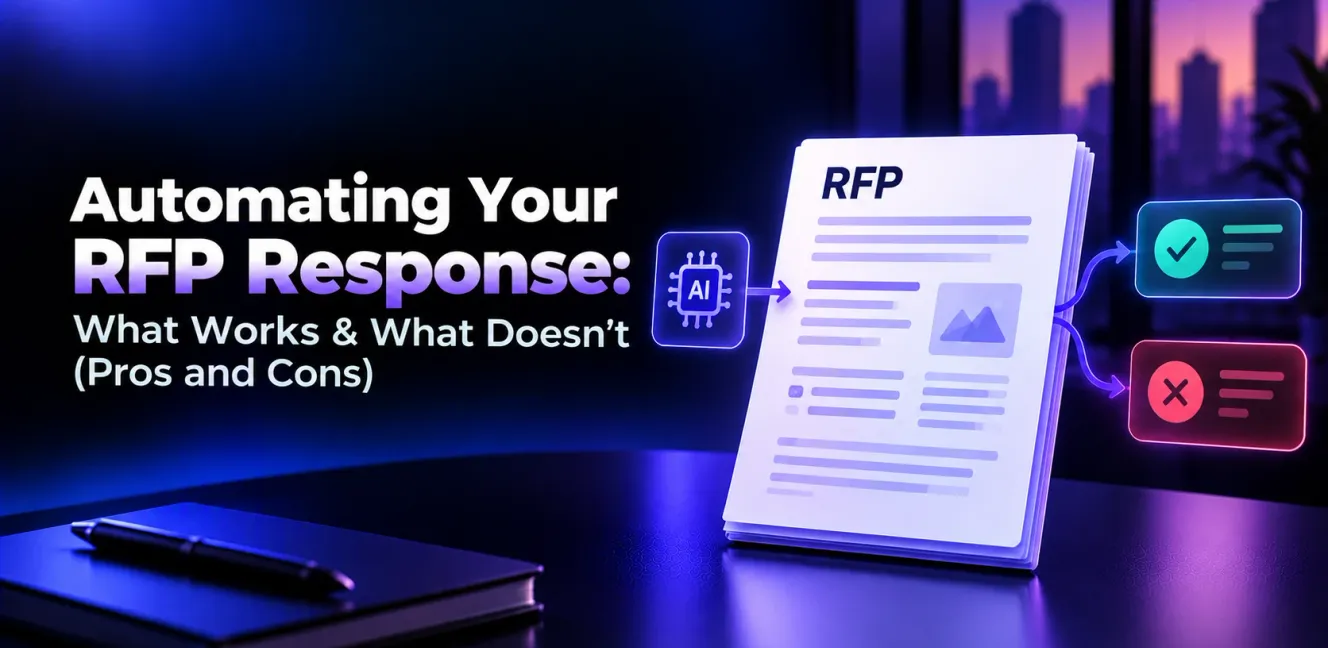
Pros and Cons of Automating RFP Response
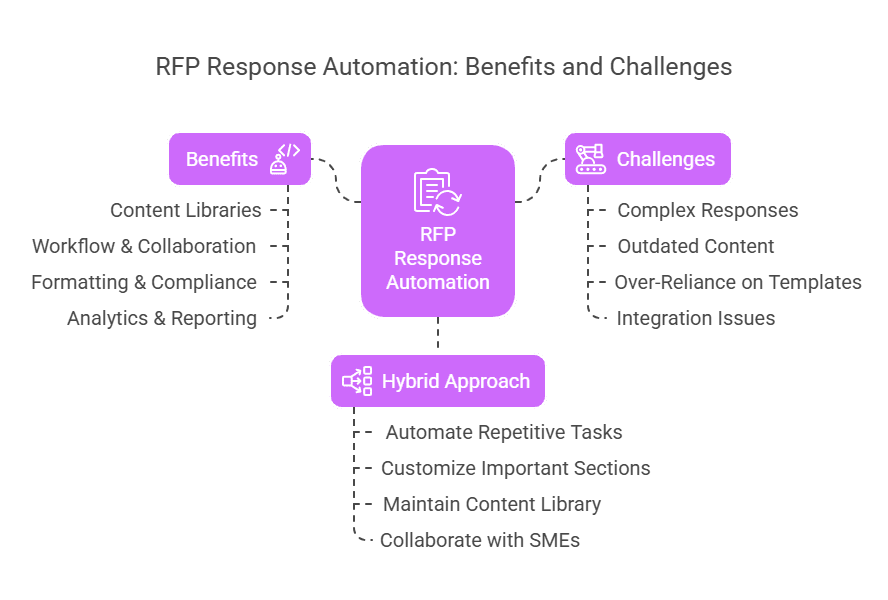
What Works Well with RFP Automation (The Good Stuff)
1. Content Libraries: Your New Best Friend
Imagine having a searchable, categorized library of your company’s best RFP answers that are approved, up-to-date, and ready to go. That’s the magic of an RFP content library.
RFP Automation tools let you build a centralized knowledge base, so when a question comes in that you’ve answered before (and let’s be real, that’s most of them), you can drop in the response in seconds.
Why it works:
- Saves tons of time
- Ensures consistency across proposals
- Reduces errors from copy-pasting outdated info
Pro Tip: Your content library is only as good as what you put into it. Invest time upfront in curating quality answers, and update it regularly to keep it fresh.
2. Workflow & Collaboration Features
If you’ve ever dealt with last-minute scrambles because someone missed their section, you’ll love this part. Automation platforms let you assign tasks, track progress, set reminders, and manage approvals, all in one place.
Why it works:
- Keeps everyone aligned and accountable
- Speeds up the overall process
- Makes it easy to see who’s working on what, and what’s still pending
Bonus: Many tools integrate with Slack, Teams, and email, so your team doesn’t need to adopt yet another platform from scratch.
3. Formatting & Compliance Automation
Let’s not forget the most boring part of RFPs: formatting everything to match the buyer’s requirements. Whether it’s adjusting fonts, file types, or answering in a specific template, RFP response automation can handle a lot of that grunt work.
Some RFP automation tools also help you flag missing sections or required fields, so you don’t accidentally submit a non-compliant proposal and get disqualified on a technicality.
Why it works:
- Reduces manual errors
- Saves hours on mind-numbing formatting tasks
- Ensures compliance with RFP specs
4. Built-in Analytics and Reporting
Want to know how long your team spends on RFPs? Which sections cause the most bottlenecks? Or which answers are reused the most?
Automation tools provide insights that help you improve over time. You can spot inefficiencies, track your win rates, and figure out where to invest effort for better results.
Why it works:
- Drives continuous improvement
- Justifies investment in automation
- Helps you refine your process with data, not guesswork
What Doesn’t Work (Or At Least, Not Without Issues)
Okay, so RFP response automation has a lot going for it. But it’s not perfect. Here’s where it tends to fall short, and what you need to watch out for.
1. Complex or Strategic Responses
Not every RFP question is a cookie-cutter one. Some require tailored answers, strategic thinking, or a human touch to really stand out. Think executive summaries, implementation plans, or anything involving nuance.
If you rely too heavily on automation for these, your proposals can come off as generic, bland, or worse, robotic.
Where it falls short:
- Can’t capture your unique voice or value proposition
- Misses opportunities to differentiate in competitive bids
- Risks losing the emotional intelligence factor buyers still want
2. Outdated or Incomplete Content Libraries
You know the saying: garbage in, garbage out. If your content library is full of stale, inaccurate, or half-finished answers, automation will just serve them up faster, which is not a good thing.
Where it falls short:
- Increases the risk of wrong or misleading info
- Damages credibility with prospects
- Leads to last-minute scrambles to “fix” bad auto-filled answers
Fix it: Schedule regular audits and assign owners to different sections of your library. Make it someone’s job to keep things accurate.
3. Over-Reliance on Templates
Templates are great for consistency, but they can also become crutches. If every proposal starts looking and sounding the same, you’ll miss the chance to connect with each client’s unique goals.
RFP response automation can lull teams into a false sense of security, where they think the RFP automation tools are doing the thinking for them. That’s when win rates start to slip.
Where it falls short:
- Limits creativity
- Reduces personalization
- Makes your proposal feel like “just another response”
4. Integration Challenges
Many RFP automation tools promise seamless integration with your CRM, document management systems, and project tools. In reality, these integrations can be clunky or require extra configuration.
Where it falls short:
- Slows down your process if data doesn’t sync properly
- Creates silos instead of solving them
- Can cause frustration if the tool doesn’t “talk” to the rest of your stack
So What’s the Best Approach? A Hybrid Model.
The sweet spot isn’t full automation or fully manual. It’s a hybrid approach. Here’s what that looks like in practice:
- Automate the repetitive stuff: Pulling standard answers, assigning tasks, formatting docs.
- Customize where it matters: Executive summaries, case studies, pricing strategies, and anything involving persuasion.
- Keep your content library clean and current: Assign owners, review quarterly, and delete outdated answers.
- Work closely with your SMEs: Let automation handle the first draft, then collaborate to fine-tune answers with real expertise.
What to Consider Before You Dive In
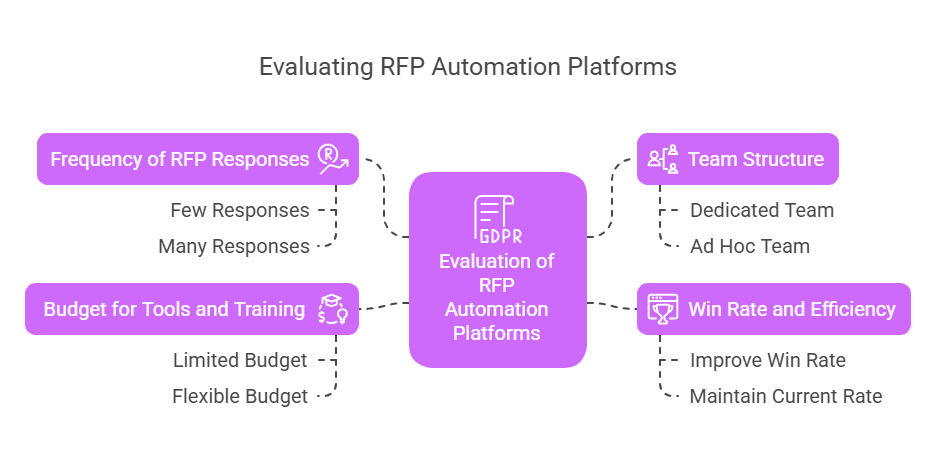
Before you throw your budget at an RFP automation platform, ask yourself a few questions:
- How many RFPs do we respond to each month? If it’s only a few, you may not need a full-blown solution, maybe just a smarter template system.
- Do we have a dedicated team or are we pulling people in ad hoc? If collaboration is messy, automation can really help streamline.
- What’s our current win rate, and can we improve it with better efficiency?
- What’s our budget for tools and training? Some platforms can be pricey, and there’s a learning curve.
Final Thoughts: Automation Should Empower, Not Replace
At the end of the day, RFP response automation should make your RFP process easier, not turn it into a robot factory. The best teams use RFP automation tools to eliminate the busywork so they can focus on what really matters: building persuasive, thoughtful, and winning proposals.
So go ahead: embrace the tools. But keep the heart and brain of your proposals human. That’s where the magic happens.