Table of contentsWhat Is an Unsolicited Business Proposal?
Key takeaways
- Send an unsolicited business proposal to pitch your ideas and stand out without waiting for a request, since most proposals are written after someone asks.
- Do your homework first: research recent news, product launches, growth changes and the company's pain points.
- Make it personal by mentioning something specific about the company, because generic proposals are the fastest way to get ignored.
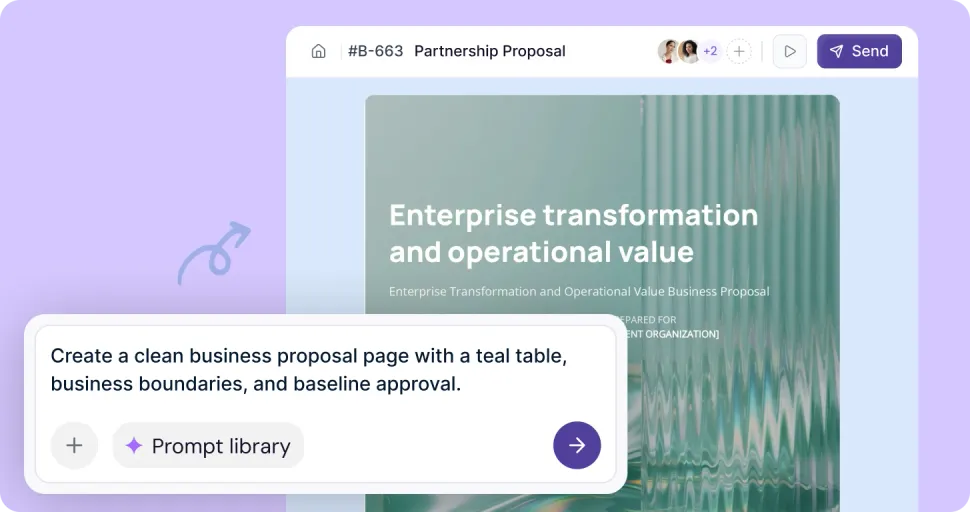
- Proposal.biz drafts and designs a personalised unsolicited proposal from a prompt in your brand style, and trackable links show whether the recipient opened it.
- Be clear about what you are offering and why it matters to them, and add proof such as quick case studies, testimonials or results from similar work.
- Keep it tight and structured, with a brief intro, the opportunity, your proposed solution and a clear ask instead of a vague 'let me know what you think'.
- Follow up smartly after a few days, avoid sending on Monday mornings or Friday afternoons, and be okay with silence.
Let’s be honest: most business proposals are written after someone asks for them. A company puts out an RFP, vendors respond, and the game begins. But what if you’ve got an idea, product, or solution that could genuinely help a business, and no one’s asking for it? Unsolicited proposals are offers you send to a company that has not asked for one.
That’s where unsolicited business proposals come in. They’re bold, proactive, and when done right, they can be incredibly effective at opening new doors.
In this article, we’re going to break down exactly what an unsolicited business proposal is, when you should consider sending one, the kinds of situations where they work best, and most importantly, how to actually write one that gets noticed. Whether you’re pitching a new product, suggesting a partnership, or just trying to get a foot in the door, this guide’s got you covered.
Let’s dive in.
What Is an Unsolicited Business Proposal?
An unsolicited business proposal is a type of business proposal that you send without being asked for. It is exactly what it sounds like. No RFP, no prior request, just you putting yourself out there.
You’re basically saying, “Hey, I see an opportunity here, and I have something that could really help you out.”
Think of it like making the first move. Risky? Sure. But also full of potential.
When Would You Need One Page Business Proposal?
So, when should you consider sending an unsolicited business proposal?
Here are a few common scenarios:
- You’ve spotted a problem a business might not even realize they have.
- You’ve created a new product or service that could make their lives easier.
- You want to start a relationship with a company you admire or want to work with.
- You’ve found a niche or gap in the market that your solution fits perfectly into.
- You’ve got data or insights that show how they could save money, boost performance, or grow faster, and you’re the one to make it happen.
Basically, if you believe there’s value you can bring and you’re confident about it, an unsolicited proposal might be the way to go.
Also read: One page business proposals: Do they really work? Do’s and Don’ts
When Do These Proposals Actually Work?
Unsolicited proposals aren’t for every situation, but they do shine in the right context:
- Innovative tech or unique solutions: Got something new that solves a common pain point? Pitch it.
- Government agencies or nonprofits: These orgs often have long-term goals but may not always be actively seeking vendors.
- Startups or fast-growing companies: They’re often moving quickly and open to creative, time-saving solutions.
- Strategic partnerships: If you’re proposing a collab that could benefit both sides, don’t wait to be asked.
How to Make an Unsolicited Business Proposal (That Doesn’t Get Ignored)
Alright, here’s the meat of it: how to actually create successful unsolicited proposals that get taken seriously.
1. Do Your Homework
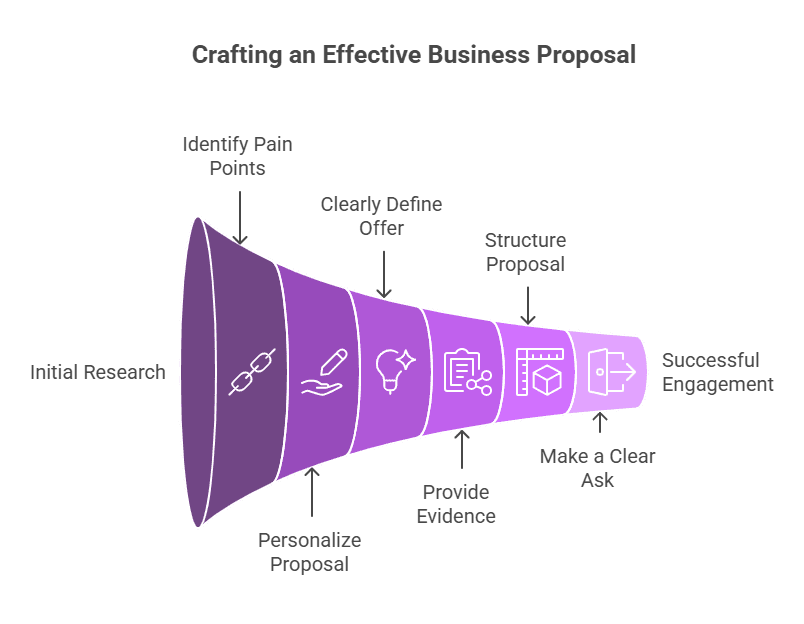
First step? Research. Deep dive into the company. Look for:
- Recent news, product launches, growth changes
- Their pain points or challenges (check social media, job postings, press)
- Who the decision-makers are
The more you know, the more relevant your unsolicited business proposal can be.
2. Make It Personal
Generic proposals are the fastest way to get ignored. Start strong: mention something specific about their company or a challenge you noticed. Show them you’ve been paying attention.
Example:
“I saw your team just launched a new customer onboarding feature. That’s a big move, and I think we can help you double your retention from it.”
Also read: Respond to RFPs Like a Pro and Win Every Time
3. Be Clear About What You’re Offering
Don’t dance around it. Get to the point quickly: what are you proposing and why does it matter to them?Focus on benefits over features. How does this solve a real problem or unlock a real opportunity?
4. Add Proof
Give them a reason to trust you. Include:
- Quick case studies
- Client testimonials
- Data or results from similar work
Even just a few strong bullets of social proof can go a long way.
5. Keep It Tight and Structured
No rambling. Keep your proposal clean and easy to follow:
- Brief intro
- The opportunity/challenge
- Your proposed solution
- Expected outcomes
- Why you?
- Call to action
Bonus points if it looks good: a well-designed, skimmable PDF or deck works better than a 5-page Word doc.
6. End with a Clear Ask
Don’t just say “let me know what you think.” Be specific. Ask for a short call, a coffee meeting, or a chance to send more info.
Give them a reason to respond now, not later.
Tips to Improve Your Chances of response for unsolicited business proposal
Sending an unsolicited business proposal is only half the game; backing it with a short case study does the rest. What you do after you hit send, and how you present your message, can make all the difference. Here are several business proposal tips to boost your chances of getting a positive response:
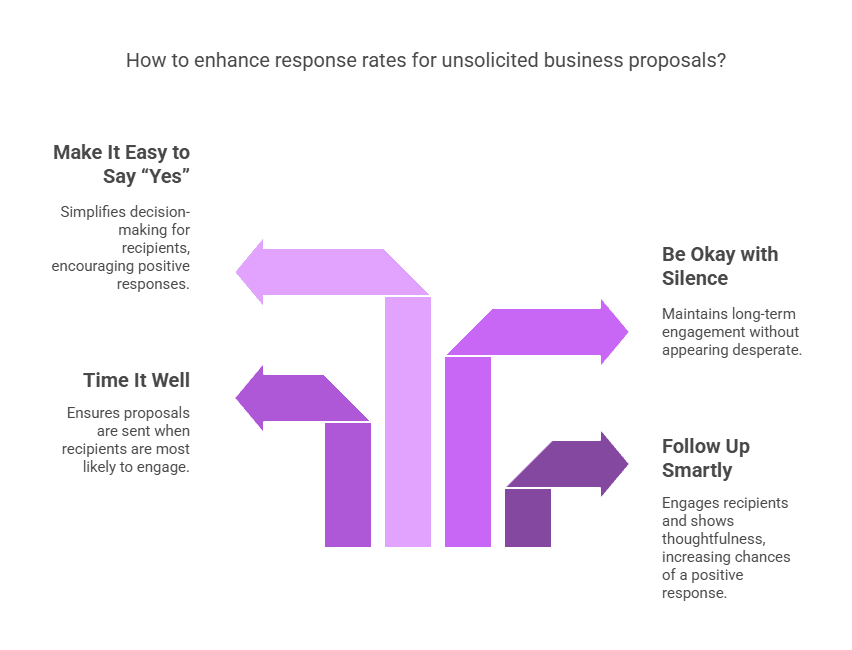
1. Follow Up Smartly
One email isn’t a strategy. It’s a shot in the dark. Follow-up is where a lot of opportunities are won.
- Wait a few days before sending your first follow-up (3–5 business days is safe).
- Keep it polite and professional: avoid sounding impatient or pushy.
- Reference your original proposal briefly and add value in the follow-up: maybe a new case study, updated data, or a relevant article they might appreciate.
- Don’t just repeat your pitch: show you’re engaged and thoughtful.
Consistency is key. Many deals are closed on the second or third follow-up, not the first email.
2. Time It Well
Timing isn’t everything, but it’s definitely something.
- Avoid sending your pitch on Monday mornings or Friday afternoons. That’s when people are either swamped or mentally checked out.
- Mid-week (Tuesday to Thursday), mid-morning (around 9:30–11:00 AM) tends to be a sweet spot when inboxes are a bit more manageable.
- If you’re targeting executives or senior leaders, earlier in the day often works best before meetings start stacking up.
Also, keep in mind industry schedules. For example, retail businesses may be busier during weekends or holidays; finance teams might be tied up at month-end.
3. Be Okay with Silence
Sometimes silence isn’t rejection. It’s just bad timing.
- The person might be on vacation, in between projects, or simply buried in work.
- Keep a light, long-term touch: maybe check back in after a month with a short, friendly email.
- If your offer is truly valuable, it’s worth circling back periodically. Timing might shift in your favor later.
Building relationships takes time. If you stay professional and patient, you’ll stay on their radar.
4. Make It Easy to Say “Yes”
Don’t make the reader work to understand your ask.
- Be crystal clear about what you’re offering and what action you’d like them to take.
- Suggest simple, low-commitment next steps: “Would you be open to a 15-minute call next week?” is way better than “Let me know if you’re interested.”
- Include a link to your calendar if possible: reduce the back-and-forth friction.
The easier you make it to respond, the more likely they will.
5. Personalize Everything
You’d be surprised how many proposals start with “Dear Sir/Madam” or copy-paste language.
- Use the recipient’s name.
- Reference something specific about their business, product, or recent achievement.
- Mention mutual connections or shared interests if you have any. It builds instant trust.
People are more likely to respond when they feel the proposal was made for them, not just sent to them.
6. Add Social Proof or Credibility Cues
If someone doesn’t know you or your brand, trust can be a barrier. Break it down by showing you’re legit.
- Mention notable clients, recognizable logos, or impressive stats if you have them.
- Include a short testimonial or quote from a happy client.
- Drop a link to your website, portfolio, or case study to back up your claims.
Even a little proof can make a big difference in whether your message gets a reply.
7. Use the Right Medium
Email is the standard, but sometimes a different channel can boost your odds.
- If you’ve already emailed and haven’t heard back, consider connecting on LinkedIn with a friendly message (not a pitch).
- For local businesses or startups, sometimes a well-designed printed proposal or direct mail can make you stand out.
- If you’ve met the person at an event or conference, reference that context in a quick call or follow-up message.
Use the medium that best fits your audience, and one that aligns with how they communicate.
Also read:
Final Thoughts
Unsolicited business proposals might feel like a bold move, and they are. But they also show initiative, creativity, and confidence. You’re not waiting around for opportunities to land in your lap. You’re out there creating them.
Yes, they take more effort. Yes, they require deeper research and a personal touch. But if you know your value, understand your audience, and craft a proposal that speaks directly to their needs, you can turn cold outreach into real opportunity.
So don’t wait for permission. If you’ve got something worth sharing, share it. The right unsolicited business proposal, at the right time, can open doors you didn’t even know existed.
Your next big client might not be looking for you yet… but that doesn’t mean they don’t need you.