Table of contentsWhy You Need an RFP Response Database
Key takeaways
- Build an RFP response database to stop scrambling for answers at the last minute.
- Assess your current RFP process first by looking at past RFPs to see what you answer again and again.
- Categorise and organise your content by topic so answers can be found quickly.
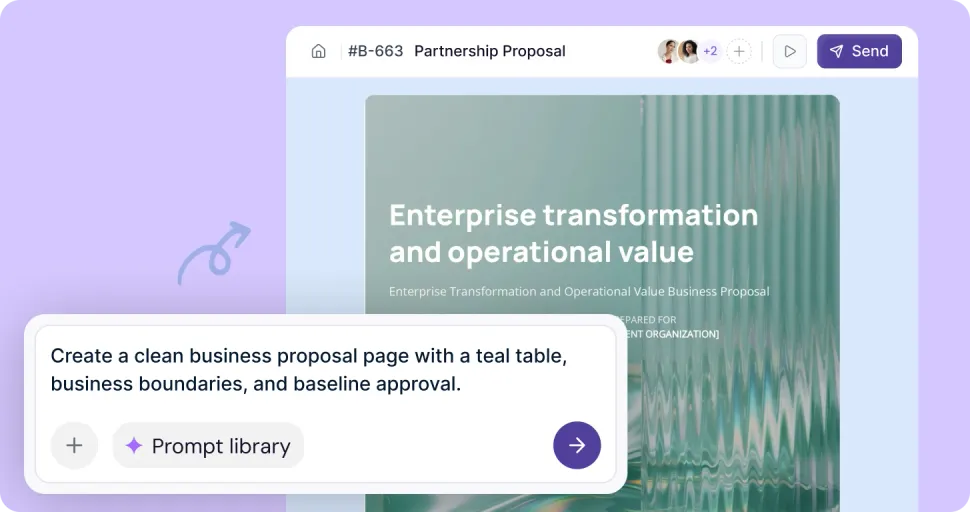
- Proposal.biz works as your response database: Content Master stores services, pricing, team bios and case studies, and drafts the RFP response from a prompt in your brand style.
- Choose a centralised, accessible repository so everyone can reach the same answers.
- Add version control and regular updates, because a database you set and forget goes stale.
- Measure and improve the database after a few rounds of proposals, treating it as an ongoing project, not a one-time task.
If you’re in a business that frequently deals with Requests for Proposals (RFPs), you know how time-consuming and challenging the process can be. Between deadlines, customization needs, and the pressure to stand out, crafting a winning proposal can feel like a daunting task. But what if there was a way to make this process smoother and faster?
The answer is simple: build an RFP response database. In this article, we’ll walk you through why you need one, how to set it up, and how it can help you not only answer RFPs faster but also win more business. Let’s dive in!
Why You Need an RFP Response Database
Before we jump into how to build one, let’s first discuss why an RFP response database is a game-changer.
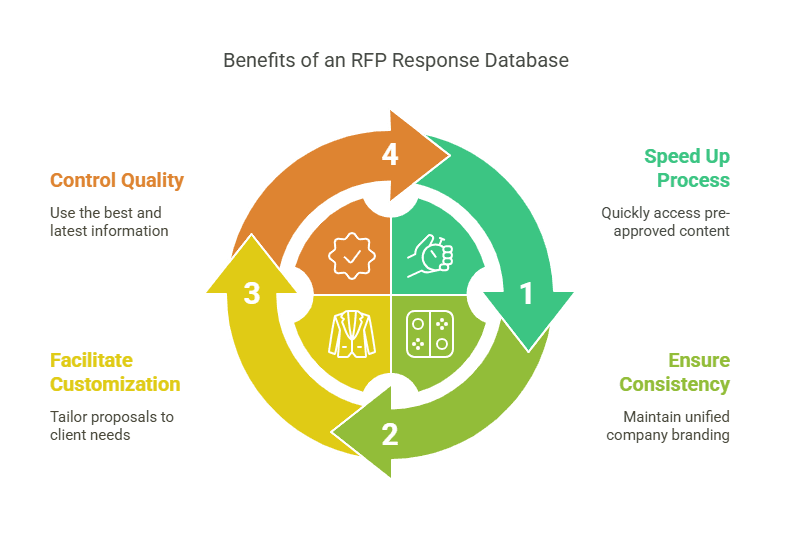
- Speed: One of the biggest challenges with RFP responses is time, which a ready RFP-compliant bid proposal structure saves. Tight deadlines often make it hard to get everything right. A well-organized response database speeds up the process by allowing you to quickly pull from pre-approved content.
- Consistency: By using a central database, your team can maintain a consistent tone, messaging, and branding across all proposals. This is essential for creating a professional, unified image of your company.
- Customization Made Easier: While the database helps you reuse existing content, it doesn’t mean you’re sending out cookie-cutter proposals. You can easily customize sections to align with the specific needs of each client.
- Quality Control: An RFP response database ensures that only the best, most up-to-date, and most relevant information is being used in your proposals. You won’t be sending out outdated responses anymore.
So, how do you build one?
Steps to build RFP Response Database
Step 1: Assess Your Current RFP Process
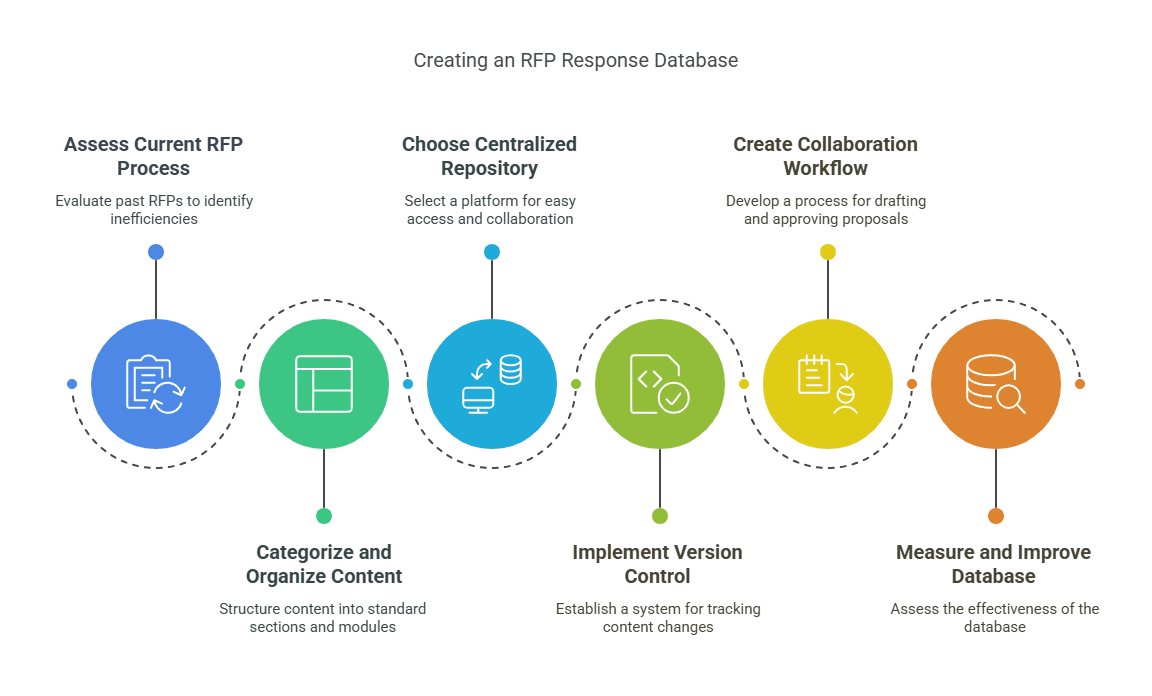
The first step in creating your response database is to evaluate your current RFP process. Look at past RFPs you’ve responded to, whether they were successful or not, and identify key areas where things could have been faster or more efficient.
- What sections do you find yourself repeating? (Company overviews, case studies, team bios, pricing models, etc.)
- Where do you get stuck? (Creating new content, formatting, or finding specific data points)
- What common mistakes or bottlenecks have you encountered? (Missing deadlines, not having the right information on hand)
By understanding your current process, you’ll have a better idea of what your database needs to include.
Step 2: Categorize and Organize Your Content
Now, it’s time to start building your database. The key here is organization. When it comes to RFP responses, having pre-built sections that are easy to access and modify can save a ton of time. Here’s how you can categorize the content:
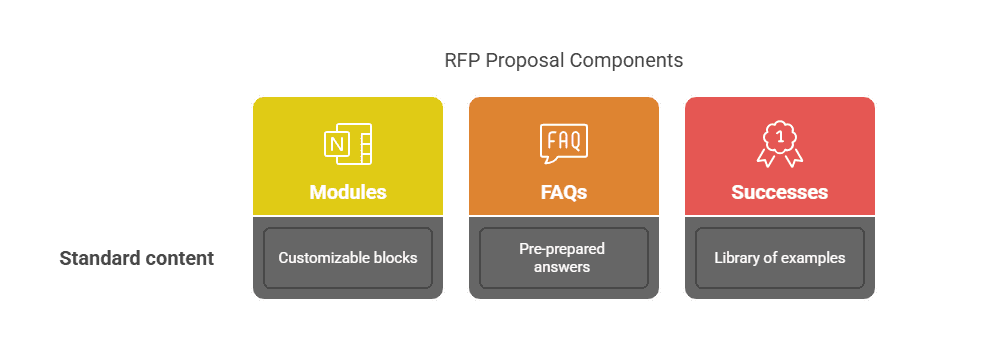
- Standard Sections: These are the parts of the proposal that are common across almost every RFP, sections like your company’s history, vision, mission, core services, team bios, and contact details. Create templates for these sections so you can easily plug in the necessary information without having to write from scratch each time.
- Customizable Modules: Some parts of the RFP may vary based on the specific project or client, like pricing models, timelines, or custom solutions. Create modular content blocks that can be mixed and matched based on the specific RFP you’re answering.
- Frequently Asked Questions: There are always a few standard questions that pop up in nearly every RFP, such as “Why should we choose you over the competition?” or “What is your approach to project management?” Prepare answers to these in advance so you don’t have to waste time rewriting them each time.
- Past Successes and Case Studies: Create a library of successful case studies, testimonials, or examples of previous work that can be easily adapted to highlight your expertise in a specific area.
Step 3: Choose a Centralized, Accessible Repository
With your content categorized, it’s important to store it in a way that’s easily accessible for your team. This is where you’ll want to choose a platform that makes it easy to manage and update content. Here are a few options:
- Cloud-based Storage: Tools like Google Drive or Microsoft OneDrive are perfect for storing your RFP content, as they allow for easy sharing and collaboration across teams.
- RFP Management Software: There are specific software solutions like RFPIO or Loopio designed for RFP responses. These platforms let you store content, track responses, and collaborate seamlessly.
- CRM Systems: If you already use a Customer Relationship Management (CRM) system, like Salesforce or HubSpot, check if it has an RFP management feature. Some CRMs allow you to store responses and create templates directly within the platform.
The goal is to have a single, easily accessible place where everyone on your team can find and contribute to the database. Make sure the platform allows for easy search and filtering so you can quickly find what you need.
Step 4: Implement Version Control and Regular Updates
Once your database is up and running, don’t just set it and forget it. Keep your content fresh and up-to-date. Here’s how:
- Version Control: Use version control to track changes to any section of the response database. This way, you’ll know which version of the document is the latest, and you can avoid using outdated content.
- Regular Updates: Set a schedule to review and update the database. For example, every quarter, review and refresh case studies, add new testimonials, and ensure your team bios reflect any changes. This keeps your content relevant and sharp.
Step 5: Create a Collaboration and Review Workflow
An RFP response is rarely a solo effort. Collaboration is key. To ensure your responses are accurate and high-quality, set up a clear workflow for your team:
- First Draft: Have one person or a small team pull content from the database and draft the initial proposal.
- Review Process: Once the draft is ready, send it to key stakeholders for review and feedback. This might include department heads, subject matter experts, or the sales team.
- Final Approval: Ensure that someone signs off on the final version to make sure it’s ready to go.
By having a clear, defined process for creating, reviewing, and finalizing proposals, you’ll avoid last-minute scrambling and ensure every proposal is as polished as possible.
Step 6: Measure and Improve Your Database
After using your RFP response database for a few rounds of proposals, it’s important to measure how well it’s working. Here are a few metrics to track:
- Win Rate: Are you winning more RFPs since you implemented the database? This is the ultimate measure of success.
- Time Savings: Track how much time is saved by reusing content. If your proposals are going out faster, that’s a great sign the database is working.
- Feedback: Collect feedback from your team about how easy or difficult it is to use the database. Use this to make improvements.
Final Thoughts: Keep Evolving Your Database
Building an RFP response database isn’t a one-time task. It’s an ongoing project that you should continue to refine and improve. As you win more business, collect more case studies, and adapt to new industry trends, your database should evolve to reflect those changes.
By putting in the effort to create a streamlined, well-organized RFP response database, you’ll save valuable time, ensure consistency, and improve your chances of winning more business. So, what are you waiting for? Start building your database today and start winning more RFPs tomorrow!