Table of contentsWhy Collaboration on RFPs is So Hard (And So Necessary)
Key takeaways
- Treat the real challenge in an RFP response as coordinating people, not just answering questions.
- Assign clear roles early, because one of the most common collaboration problems is not knowing who owns what.
- Use one centralised collaboration platform instead of email chains, shared files and a growing pile of final-final versions.
- Proposal.biz keeps your team in one document with live multi-user editing and inline comments, and Content Master stores reusable answers so experts are not hunted down at the last minute.
- Break the RFP into sections with micro-deadlines, since treating it as one massive deliverable is a recipe for last-minute panic.
- Build a content library of pre-approved answers, because much of the content does not need writing from scratch.
- Debrief together after every submission, because collaboration does not stop at submit and a short debrief catches problems early.
If you’ve ever been part of an RFP response process, you know the real challenge isn’t just answering questions. It’s coordinating people.
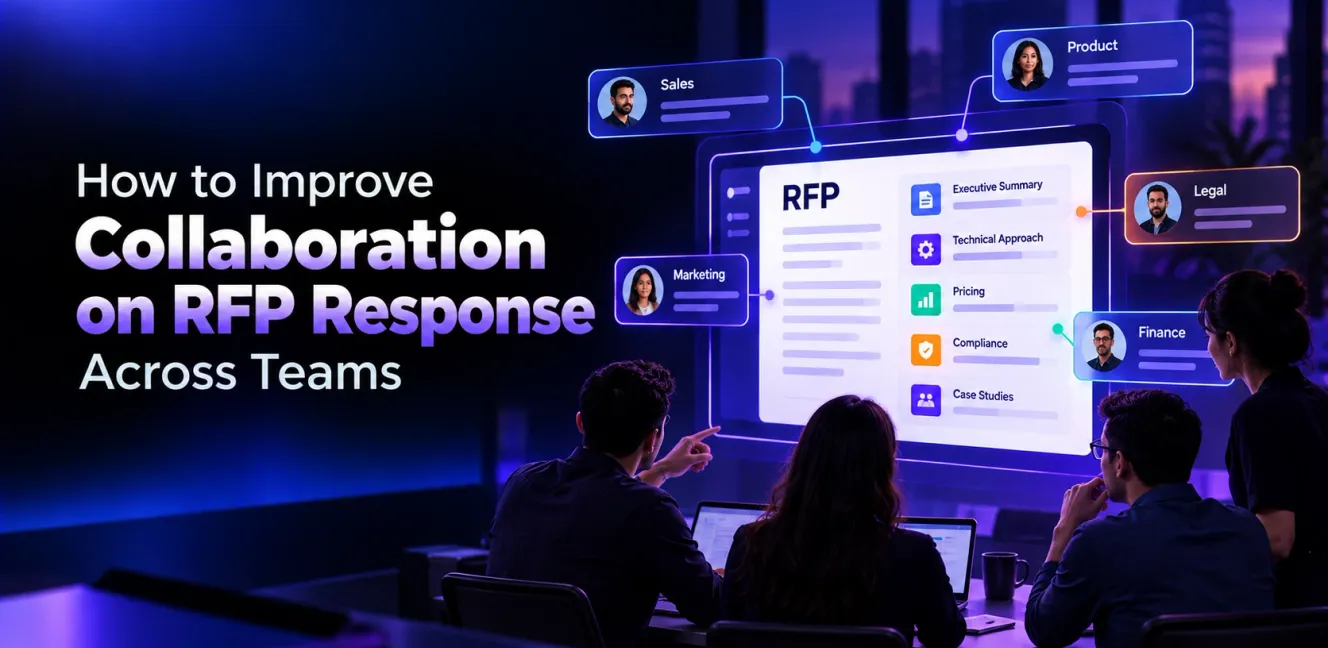
From sales and legal to product and finance, one RFP often involves 5 to 10 different people… sometimes more. Everyone owns a piece of the puzzle, but getting that puzzle assembled smoothly? That’s the hard part.
To that effect, we have taken it upon ourselves to provide some guidelines. Why should you care? Well, because we have figured out what really goes wrong with RFP response collaboration, and more importantly, how to fix it. Whether you’re working with a small in-house team or managing responses across departments (or time zones), these tips will help you improve RFP response collaboration without the chaos. Let’s consolidate some RFP collaboration practices.
Why Collaboration on RFPs is So Hard (And So Necessary)

RFPs are high-stakes projects. They often arrive with tight deadlines, long checklists, and high expectations. Yet, the people responsible for different parts of the RFP response process rarely work in the same tool, or on the same timeline.
This is the usual scenario: Sales is trying to meet the submission deadline. Legal is reviewing contract terms. Product is asked to explain technical specs last minute. Marketing is scrambling for case studies. Finance is finalizing pricing after three follow-ups
All while one person (usually sales or a proposal manager) is stuck playing air traffic controller.
Sound familiar?
Sure, the problem is a lack of effort. But it’s also the lack of structure and RFP collaboration practices. And it’s a big reason why so many companies struggle to hit deadlines, maintain quality, or win consistently.
RFP Collaboration Best Practices
Tip #1: Assign Clear Roles Early (Don’t Wait Until the RFP Hits)
One of the most common issues in collaboration in RFP is not knowing who owns what.
You get the RFP, start assigning sections ad hoc, and suddenly everyone’s confused about timelines, expectations, and responsibilities.
**How to fix it:
**Create a reusable RFP response responsibility matrix. It should include:
- Section owners (e.g., Product owns technical questions, Legal owns compliance)
- Reviewers and approvers for each area
- A primary proposal coordinator (usually sales, biz dev, or ops)
Use this matrix to assign tasks as soon as an RFP drops, or better, build it into your onboarding for every new team member who might get looped into proposals.
Tip #2: Use a Centralized Collaboration Platform
Email chains. Google Docs. Slack threads. Version 18-final-FINAL.docx.
Too many teams try to collaborate across disconnected platforms, which creates confusion, delays, and duplication of work.
What to do instead:
- Use a shared workspace like Notion, Confluence, or a proposal management tool
- Centralize your content library (past responses, bios, case studies, certifications)
- Track progress in one place. Don’t rely on “checking in”
If you’re regularly responding to RFPs, consider adopting an AI RFP response tool that lets teams collaborate in real-time, assign sections, track edits, and store reusable content.
This streamlines proposal collaboration and improves proposal response coordination.
Tip #3: Break the RFP into Sections and Build Micro-Deadlines
Too many teams treat the RFP as one massive deliverable. That’s a recipe for last-minute chaos.
Instead, break it down.
What this looks like:
- Separate the RFP into 4–6 key categories: company info, pricing, technical, legal, experience, etc.
- Assign section leads and micro-deadlines for each part
- Run a quick daily check-in or async update (even 5 minutes helps)
This creates clarity, accountability, and momentum. Instead of a mad rush at the end, you create rhythm and ownership throughout the process.
Tip #4: Create a Pre-Approved Content Library
Half of the RFP content doesn’t need to be written from scratch. You just keep forgetting where it is or it lives in someone’s inbox.
What to include in your content library:

- Company overview
- Product features and benefits
- Technical specifications
- Case studies and success stories
- Security/compliance certifications
- Pricing models (if applicable)
- Key team bios
Use tags and categories so content is easy to search. Update regularly after every RFP win or loss.
Many teams are now using AI-powered RFP tools to maintain dynamic content libraries that auto-suggest the best responses based on context.
We hope that helps you tailor your RFP writing workflow.
Tip #5: Automate What You Can (Without Losing the Human Touch)
You can’t (and shouldn’t) automate everything. But you can automate enough to give your team space to focus on what matters: strategy, storytelling, and personalization.
What you can automate:

- First-draft generation for common questions
- Proposal formatting and structure
- Content suggestions based on past wins
- Section completion tracking and progress updates
- Submission reminders and deadline alerts
This is where a smart AI RFP response tool makes a difference. Instead of spending hours assembling the proposal manually, you work on refining and customizing what actually wins deals.
Tip #6: Debrief Together After Every Submission
Collaboration doesn’t stop after you hit “Submit.”
A 15-minute debrief can help you catch process issues, celebrate wins, and prepare better for the next one.
Questions to ask in a team debrief:
- What slowed us down this time?
- Which content felt outdated or hard to find?
- Were any teams overloaded or unclear on roles?
- What part of the proposal felt the strongest?
- What would we change next time?
Use these learnings to continuously refine your RFP response, collaboration workflow, and proposal content library.
Better Collaboration Leads to Better Proposals (And More Wins)
You can have the best product, the best pricing, and the best proposal writer on your team. But if your people can’t collaborate clearly during an RFP, you’re still going to miss deadlines, lose deals, or settle for rushed responses that don’t show your full value.
Winning more RFPs isn’t about working harder; a shared RFP-compliant bid proposal structure keeps every contributor writing to the same plan. It’s about working smarter together by following RFP best practices.
To improve how your team collaborates, start with structure. Define who’s doing what. Create a shared place to track progress. Build a content library that saves everyone time. Use check-ins. Celebrate small wins. And yes, bring in tools that take the pressure off.
If you’re dealing with multiple contributors and tight timelines, consider using an AI RFP response tool. It won’t just help you move faster. It frees your team to focus on what really matters.. answers that resonate, and proposals that close.
Because at the end of the day, collaboration isn’t just about getting the RFP done. It’s about increasing your chances of winning it.