Table of contentsAbout the Project
Key takeaways
- Ask questions before responding to an RFP, because not understanding what the client is actually trying to do will practically guarantee failure.
- Check whether the RFP aligns with your company's expertise and capabilities before you commit hours to it.
- Ask how decisions are being made, since a well-written proposal can still miss the mark if you do not understand the evaluation criteria.
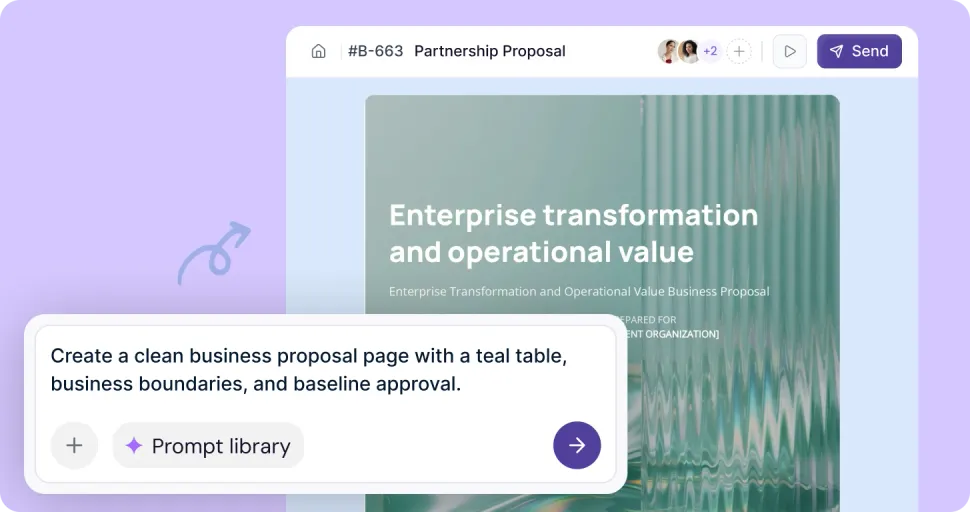
- Proposal.biz drafts and designs the RFP response from a prompt in your brand style once you decide to bid, so the time you save goes into clarity and fit.
- Read between the lines to understand why the RFP was issued and the bigger context behind it.
- Do not treat an RFP as just another checkbox project, because fit and clarity win bids.
- Look at the RFP from the buyer's side, since writing a good RFP starts with understanding what the people responding need.
There are tons of articles that will tell you the way to get an RFP response right. But do you know what will practically guarantee its failure? Jumping in without asking the right questions.

See, if you jump into writing too soon, you risk missing key details or worse, solving the wrong problem. That’s how teams end up wasting time and sending out proposals that fall flat. The most successful responses always start with a pause and a few smart moves. And that begins with asking the right things.
This guide covers the most important questions to ask before responding to an RFP. We’ve broken them down into four simple sections to help you understand what the client really wants, how to position your solution, and how to align your team before the first word is written. The goal is to make your response, often built on an RFP-compliant bid proposal, sharp, relevant, and easy to say yes to, following the RFP best practices.
About the Project
Let’s start with the basics of rfp response process. If you don’t understand what the client is actually trying to do, you’re just guessing. So ask yourself:
**1. What’s the real problem the client is trying to solve?**This should shape everything in your response. If you’re not solving the actual pain point, features and pricing won’t matter.
**2. What goals are they hoping to hit with this project?**Understanding their goals gives you a way to frame your solution as a win for them.
**3. What’s the project timeline and scope?**This tells you how big the project is and how quickly they expect results. It helps you plan your team’s capacity and your pricing.
**4. What are the expected deliverables?**You need to be super clear about what you’re being asked to deliver. That way, there are no surprises later.
**5. Is there a defined budget or at least a range?**If there’s no budget, be cautious. If there is, you can use it to shape your solution.
**6. Are there any existing systems, tools, or processes your solution needs to integrate with?**This can seriously affect complexity, timeline, and cost, so ask early.
**7. How will the client measure success?**Knowing their KPIs means you can align your outcomes with what they actually care about.
About Your Company
This part is about making sure you are a good fit. Does the rfp align with your company’s expertise and capabilities? Even if you can respond, should you?
**8. Are your services or solutions actually a match for what they need?**Sounds obvious, but you’d be surprised how often companies chase the wrong RFPs.
**9. Do you have relevant experience in this industry or type of project?
**They want to know you’ve done this before, and done it well. To avoid this, ensure you’re following RFP best practices and aligning your offering with the client’s needs as part of the RFP response process.
**10. Can you back that up with case studies or examples?**Real results build trust. If you have proof, share it. If not, consider whether this is the right project to pursue.
**11. Who’s on the team that would handle this, and what are their strengths?**Clients want to know who’s behind the scenes, not just your brand name.
**12. How do you price your projects, and what would pricing look like here?**Make sure your pricing model fits how they plan to buy.
**13. What’s your delivery or implementation approach?**Your methodology says a lot about how you work. Be clear about your process and timelines.
**14. How do you handle support, risk, and unknowns?**No project goes perfectly. Showing you’ve thought about risk and post-launch support can give you an edge.
About the RFP Process
A well-written proposal can still miss the mark if you don’t understand how decisions are being made.
**15. What criteria will the client use to choose a vendor?**Some prioritize cost. Others care more about past experience or speed. Know where you’ll shine.
**16. How is each part of the proposal weighted?**If technical capabilities are 60% of the score and price is 10%, your strategy changes entirely.
**17. What’s the exact submission deadline (and format)?**Late is late, even if it’s by five minutes. Confirm the deadline and any specific submission requirements.
**18. Are there any must-haves that disqualify vendors?**Make sure you meet all the minimum qualifications before investing time.
**19. Who are the decision-makers reviewing this?**Knowing the audience helps you write with the right tone and level of detail.
**20. Will there be follow-ups, like a pitch presentation or Q&A?**If yes, you’ll want to prepare early and factor that into your resource planning.
Other Things You Should Know Before Saying Yes
This is the context. The bigger picture. It helps you read between the lines and figure out why this RFP exists in the first place.
**21. Why is the RFP being issued now?**Are they replacing a vendor? Launching something new? A change in leadership? Understanding the timing helps you position better.
**22. What pain points are they trying to solve?**If you can speak to these directly in your proposal, you’ve already made a stronger case.
**23. Who are the likely competitors bidding on this?**Knowing who else might respond helps you shape your differentiators.
**24. How can you stand out from everyone else?**What’s your unique strength? What do you offer that’s hard to replicate? Lean into it.
**25. What risks are involved in the project, and how would you handle them?**Mentioning risks shows maturity. Having a plan to manage them shows leadership.
**26. Are there legal, regulatory, or compliance factors you need to account for?**Missing one clause here could tank the whole deal. Better to ask early and build around it.
Our Take on RFP Response
So, what should you do when responding to an RFP?

If there’s one piece of advice we’d give: don’t treat RFPs as just another checkbox project. Behind every RFP response formula is a business goal, a pain point, and a decision-making team that wants clarity, not complexity. The better you understand their world, and your fit in it, the better your chances of winning.
Most vendors rush. They respond to every RFP without thinking twice. But if you pause, ask better questions, and qualify the opportunity smartly, you’ll save time, reduce rework, and increase your win rate.
Use this question set as a gut-check before you commit. It’s less about having all the answers, and more about knowing which ones matter.
RFPs For All Stakeholders
This guide was built from a vendor’s point of view, but let’s zoom out for a second.

If you’re writing an RFP, start from a request for proposal template: Ask yourself, “Are you giving vendors the right details to work with?” Clear objectives, context, timelines, and evaluation criteria go a long way in getting better responses.
If you’re starting the RFP process internally: Ask questions like, “Do we really need an RFP?” “What’s our goal?” “Who will evaluate the responses?” “Are we ready to onboard a vendor?”
If you’re responding to an RFP: Use every question in this guide to qualify the opportunity, shape your story, and flag any red flags early.
The RFP response process shouldn’t feel like a guessing game for anyone involved. When both sides are thoughtful, the outcomes are better. Period.
Personalized Responding to an RFP with Proposal.Biz
Winning RFPs isn’t just about writing fast or making it look good. It’s about clarity. Fit. Strategy. If you want to submit stronger proposals, start by asking smarter questions as part of your RFP response process.
And if you’re tired of managing this whole process in spreadsheets and folders, good news. We’re building Proposal Biz: a proposal management tool made for teams who want to work smarter, respond faster, and close more.
Want early access? Join our insider waitlist. Let’s build it right. Together. For us winning RFPs it’s about clarity. Fit. Strategy. If you want to submit stronger proposals, start by asking smarter questions.
Next time an RFP lands in your inbox, don’t rush to respond. Pause, ask these questions, and build a proposal that actually makes sense for them and for you.