Table of contentsThe Unique Needs of Enterprises in the RFP Process
Key takeaways
- Remember that enterprise RFP responses are more than answering a list of questions: you juggle high volumes of proposals and coordinate teams across departments.
- List the key considerations before you shop, covering the features, integration needs and team collaboration your software must handle.
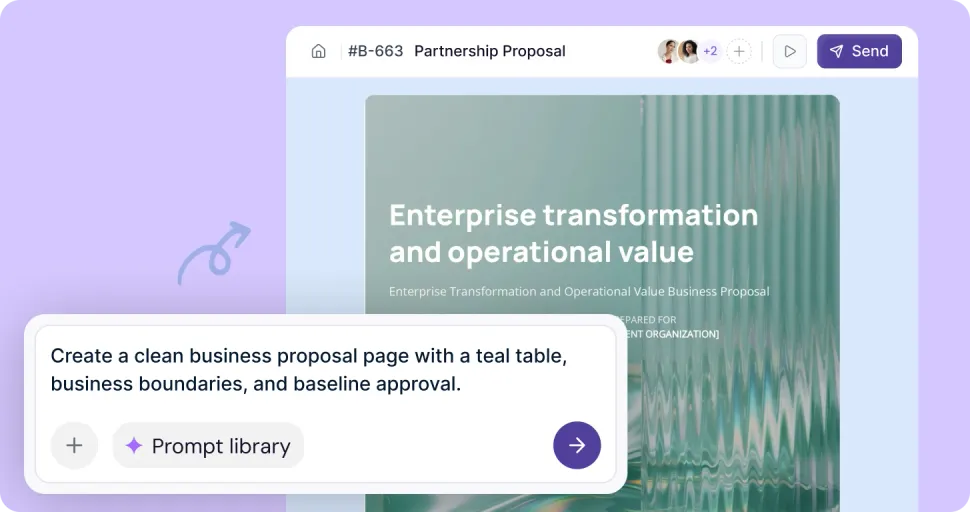
- Proposal.biz drafts and designs an RFP response from a prompt in your brand style and keeps reusable answers in Content Master, so large teams respond faster without starting from scratch.
- Follow a structured selection process after the feature review, so the decision rests on your requirements and not on the best demo.
- Choose software that can greatly improve your team's efficiency, since a good fit takes the headache out of high RFP volume.
Let’s face it: RFPs can be a headache for any enterprise.
Between juggling massive volumes of proposals, coordinating teams across departments, and ensuring compliance, it’s easy for the process to become chaotic.
But the right software for Enterprise RFP response can be a game changer, streamlining everything from collaboration to automation, and giving you back precious time to focus on what really matters: winning big deals.
So, how do you choose the best software for your enterprise?
The decision goes beyond just picking a tool; it’s about finding a solution that integrates with your existing systems, scales with your growth, and tackles the unique challenges enterprises face.
In this guide, we’ll break down exactly what to look for, so you can stop stressing over RFPs and start submitting responses that seal the deal.
The Unique Needs of Enterprises in the RFP Process
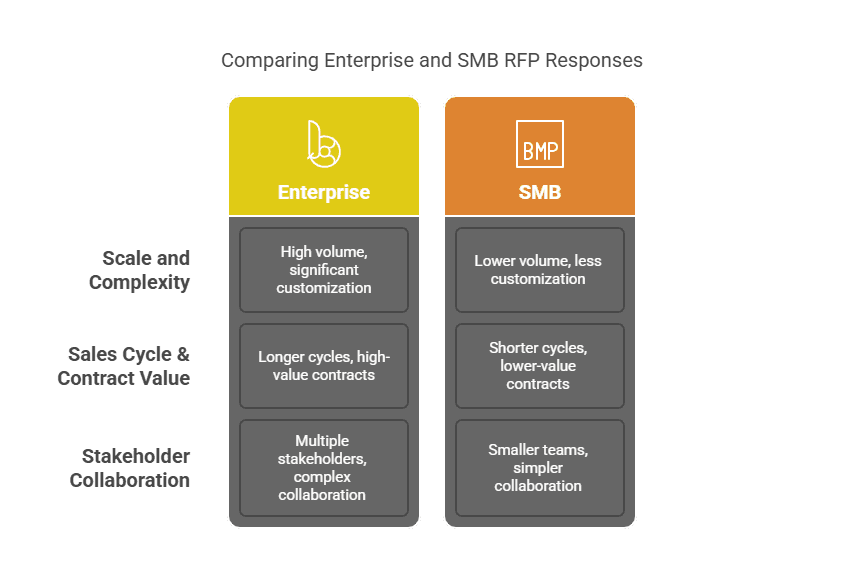
At first glance, RFP responses might seem like a straightforward task: answer a list of questions and submit your proposal. However, for enterprises, the complexity of these responses is much greater. Enterprises typically face unique challenges when it comes to Enterprise RFP response: challenges that small and medium businesses (SMBs) do not encounter at the same scale. Let’s explore these differences to understand why the right RFP software is essential.
- Scale and Complexity
Enterprises deal with a high volume of RFPs, often involving different departments, teams, and geographical locations. Each proposal is unique and demands significant customization. This isn’t just about responding to a set of questions. It involves aligning multiple departments, gathering data from various sources, and coordinating input from executives, legal teams, finance, and more.
- Longer Sales Cycles and High-Value Contracts
Enterprise RFPs tend to support larger, more complex contracts that can take months (or even years) to finalize. The stakes are high, which means every response must be polished, accurate, and persuasive. Mistakes can result in the loss of multimillion-dollar deals, so your enterprise needs software that ensures every proposal is top-notch.
- Collaboration Across Multiple Stakeholders
Unlike SMBs, which may have a smaller team dedicated to RFP responses, enterprises often involve multiple stakeholders from various departments. This means collaboration is key. Without seamless workflows and clear communication, the Enterprise RFP response process can quickly become chaotic.
Given these unique demands, selecting the right RFP software becomes crucial for enterprises. Now, let’s dive into the process of choosing the right tool for your organization.
Key Considerations for Choosing RFP Software for Enterprises
When selecting software for enterprise RFP response, there are several factors to keep in mind. These go beyond the basic features and focus on the specific needs of large organizations.
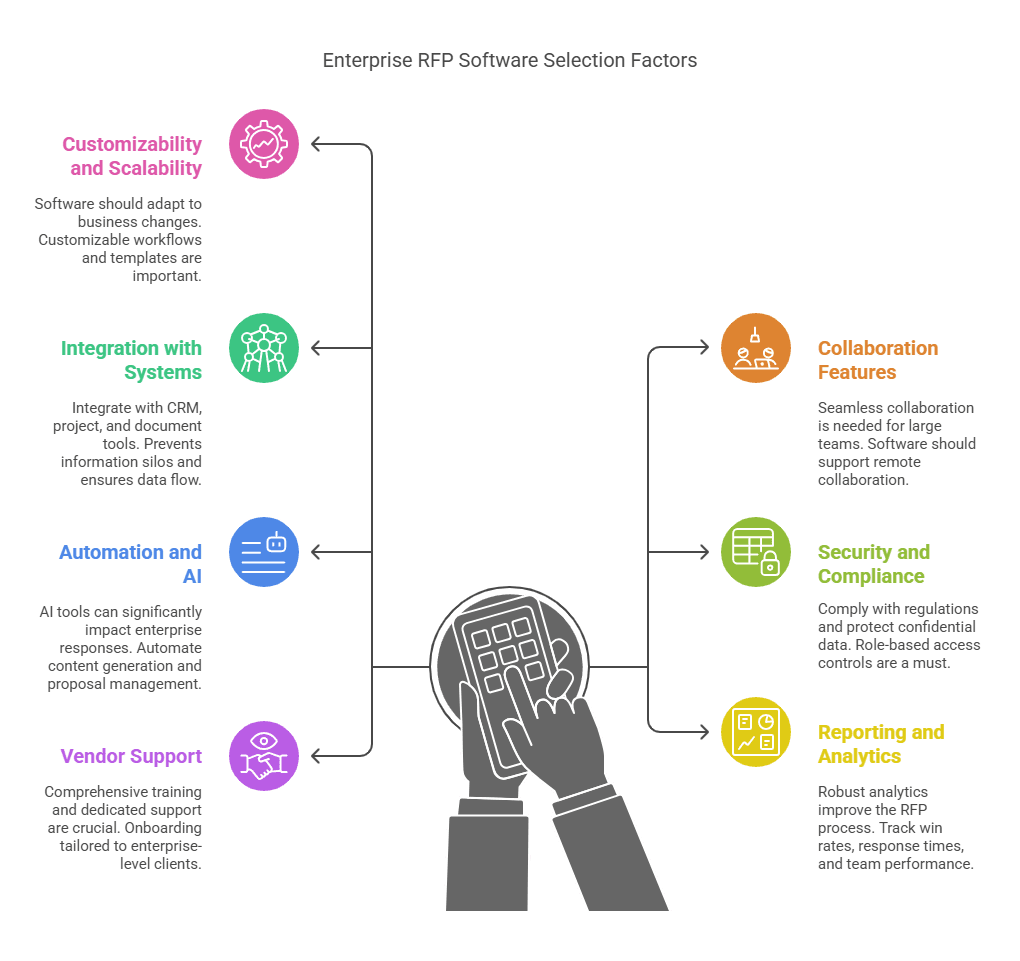
1. Customizability and Scalability
Enterprises aren’t static; they grow and evolve. The RFP software you choose needs to scale with your business and be flexible enough to adapt to changes in your organization’s structure. Customizability is also important: whether it’s adjusting workflows or creating templates tailored to specific client needs, the software should allow you to build a system that works for you.
For example, you might need to modify the approval workflow for different types of RFPs. Perhaps a legal review is needed for one type, but not for another. Customizable workflows, fields, and templates ensure that the software can support all your enterprise’s needs, no matter how complex.
2. Collaboration and Communication Features
The larger the team involved in RFP responses, the greater the need for seamless collaboration. Multiple departments need to review, edit, and approve various sections of a proposal, often simultaneously. Look for software that enables real-time collaboration and version control, so everyone is working on the most up-to-date version of the proposal.
Moreover, as many enterprises operate across different locations, your RFP software should support remote collaboration. Look for tools that integrate with communication platforms like Microsoft Teams, Slack, or email systems, allowing your teams to stay in the loop no matter where they’re working from.
3. Integration with Existing Systems
Enterprises rely on various software tools for different functions: CRM systems (like Salesforce or Microsoft Dynamics), project management platforms (like Jira or Asana), and document management solutions (like SharePoint). The RFP software you choose should integrate seamlessly with these existing tools to prevent silos of information and ensure smooth data flow.
For instance, integrating your RFP software with your CRM ensures that your sales and RFP teams have access to the same customer data, such as contact details, preferences, and previous interactions. This helps to create more personalized and targeted RFP responses.
4. Security and Compliance
Enterprises are often handling sensitive information, especially in industries like healthcare, finance, or government contracting. When choosing RFP software, it’s crucial to ensure that the tool complies with industry-specific regulations (GDPR, HIPAA, etc.) and provides the necessary security features to protect confidential data.
Role-based access controls are a must. This ensures that only authorized individuals can view or edit specific parts of a proposal, and that confidential sections are restricted. Additionally, features like audit logs will help you track who made changes to the RFP and when, which is important for compliance purposes.
5. Proposal Automation and AI Features
With the increasing complexity of Enterprise RFP responses, AI-driven tools can make a significant impact. Automation features like AI-powered content generation and proposal management are particularly useful for large enterprises. AI can automatically fill in standard sections of proposals, saving time and reducing the risk of errors.
Look for software that includes AI-driven recommendation engines to suggest responses to frequently asked questions or reuse content from previous RFPs. A central content library can also help maintain consistency across proposals by providing reusable answers, templates, and technical documentation.
6. Reporting and Analytics
To improve your RFP process, you need robust analytics and reporting tools. Enterprise RFP software should provide metrics like proposal win rates, average response times, and team performance. This data can help you identify areas for improvement, such as slow approval processes or gaps in response quality.
Tracking key performance indicators (KPIs) can also be useful for managing your team’s performance and making strategic decisions based on historical data. For example, understanding which types of RFPs are most frequently won can help you focus your efforts on more promising opportunities.
7. Vendor Support and Training
Choosing the right software isn’t just about features. It’s also about the level of support you’ll receive from the vendor. Given the complexity of RFP responses, the software will likely require ongoing customization, troubleshooting, and training. It’s crucial to select a vendor that offers comprehensive training programs and a dedicated support team familiar with enterprise needs.
Look for vendors with a proven track record of supporting large organizations and providing onboarding tailored to enterprise-level clients.
The Selection Process: Steps for choosing Enterprise RFP software
Now that we’ve covered the key features to look for in enterprise RFP software, let’s break down the selection process into actionable steps:
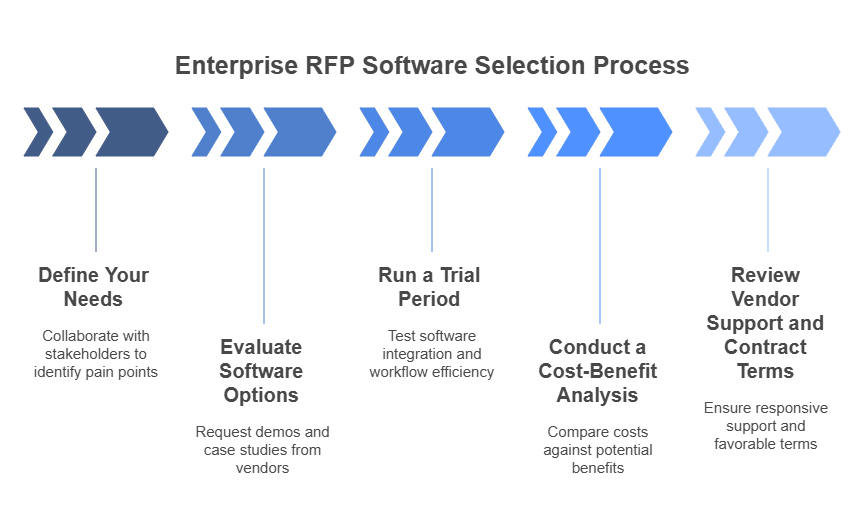
1. Define Your Needs
The first step is to understand the unique needs of your enterprise. Collaborate with stakeholders across departments (sales, legal, finance, IT, and others) to identify pain points in your current RFP process. What’s working? What isn’t? Understanding these issues will help you prioritize which features matter most.
2. Evaluate Software Options
Once you’ve identified your needs, start evaluating software options. Request detailed demos from vendors and ask for case studies that demonstrate how their solutions have worked for other enterprises in your industry. Test the software thoroughly, ensuring that it integrates well with your existing systems and meets your collaboration, security, and customization needs.
3. Run a Trial Period
Before committing, consider running a trial with a smaller team or using the software for a limited number of RFPs. This will allow you to test how well the software integrates into your workflows and whether it truly addresses the pain points you identified.
4. Conduct a Cost-Benefit Analysis
Enterprise software often comes with a hefty price tag. Make sure to evaluate the cost of ownership, including licensing, training, and maintenance fees. Compare these costs against the potential time savings, improved win rates, and efficiency gains the software offers.
5. Review Vendor Support and Contract Terms
Before making your final decision, review the vendor’s support offerings and the terms of their contract. Ensure that the support team is responsive and that the software’s service level agreements (SLAs) meet your enterprise’s needs. You want a long-term partnership with a vendor that understands your business and is committed to helping you succeed.
Conclusion
Choosing the right software for enterprise RFP responses is a big decision, but it can greatly improve your team’s efficiency, collaboration, and proposal success rate.
By carefully considering your enterprise’s unique needs, prioritizing essential features, and selecting a vendor that understands the scale of your organization, you’ll be better positioned to win high-value contracts. The right solution will help you automate RFP response process workflows and streamline your overall approach.
Remember, enterprise-level RFP responses are complex, but with the right software, they don’t have to be overwhelming. Whether it’s automation, collaboration, security, or integration, choosing the right tool will set you up for success and ensure that your enterprise is always prepared to put its best foot forward in every proposal.